How do I arrange airport special assistance before flying?
A long walk to the gate, unfamiliar security checks or boarding steps can make flying difficult. Airport special assistance is not just for wheelchair users: people with non-visible disabilities can need it too. CAA says disabled passengers and those with reduced mobility are entitled to free assistance when departing a UK airport on any airline, or arriving in the UK on a UK or EU airline. Planning helps staff understand the support you actually need. If you use a powered wheelchair or scooter, booking assistance also means checking how your own equipment will travel.
ishowcrime desk
Sources checked 1 November 2026
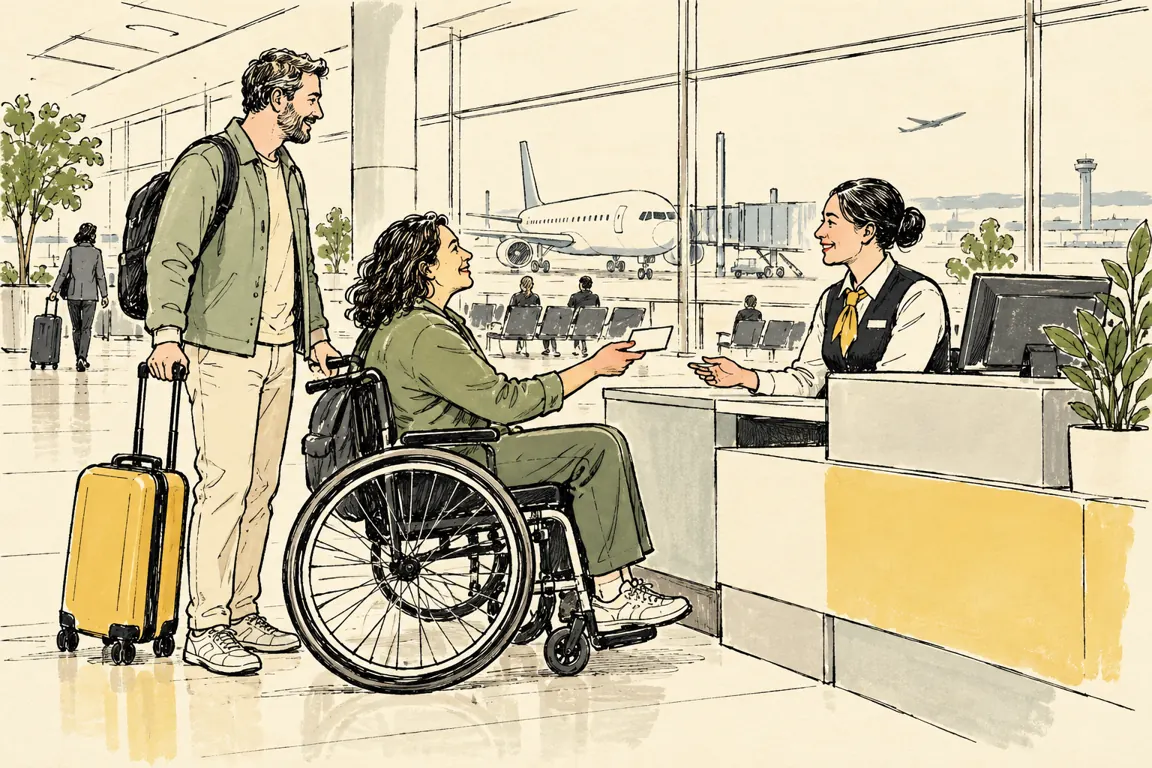
Here’s what you can do.
Request help before the flight
Ask your airline, travel agent or tour operator when booking, ideally at least 48 hours before departure. Heathrow gives the same advice. Explain the help needed across departures, connections and arrival rather than assuming a ticket automatically books assistance. Ask for written confirmation and keep it with your travel details.
Explain practical needs and limits
Discuss walking distances, boarding steps, toilet access and any mobility aid with the airline. Ask what is available on your actual aircraft. Airport assistance is not personal care: airline staff are not expected to help with eating, taking medicine or using the toilet. For an electric wheelchair or scooter, give the airline its make, model, size, weight and battery details in advance. Explain whether it folds and how it is assembled or dismantled; bring its operating manual. These details help staff plan safe loading and storage, because airline restrictions differ. On covered journeys, up to two mobility items travel free in addition to your usual baggage allowance. Confirm arrangements with the airline rather than treating the free allowance as approval for every battery or size.
Check where and when to meet staff
Check your airline's arrival instructions. Heathrow's departures guide advises allowing three hours to get through the airport. At Heathrow, help points are in official car parks, drop-off areas and bus, train and Underground stations. Use the button or phone to explain your location and needs. Staff can guide you or arrange assistance. Inside the terminal, pre-booked passengers should go to the Assistance area; Heathrow Helpers in purple can direct you. The guide below links to terminal maps. Tell staff if support is missing or unsuitable. Ask how your mobility aid will be returned. CAA says it should come back at the arrival gate unless there are exceptional reasons. Report damage promptly and explain what help you need to continue. Ask about a temporary alternative, which may differ from your own equipment.
Your quick checklist.
Tick what you’ve done. This stays on this page.
0 of 3 markedDownload a short text copy to read without internet. It cannot call or alert anyone.
A few things explained.
What if I could not give 48 hours' notice?
Ask the airline or travel organiser as soon as possible. CAA warns that without advance notice you may face delays or not receive the support you need. Do not assume a late request has been arranged until you have checked.
Must I prove my disability or wear a lanyard?
GOV.UK says medical evidence is not required to prove the need for special assistance. CAA says hidden-disability lanyards or badges are optional. This is different from any separate medical clearance needed to fly; discuss that with the airline if relevant. At Heathrow security, tell staff what help you need. If you cannot walk through the scanner, they can search you while you remain in your chair. You can ask a Security Manager for a private search, with at least two security colleagues present and a companion with you. Assistance does not remove the need for security checks.
Where can I get help if assistance fails or my mobility aid is damaged?
Tell airport or airline staff promptly, then use the responsible organisation's formal complaints procedure if unresolved. Airports handle ground assistance; the airline handles help during the flight. CAA says the airport must provide a temporary alternative if mobility equipment is damaged, but it may not be like-for-like. The airline is responsible for damage compensation, which can be limited. CAA's complaint page explains how to escalate an unresolved complaint.