My car part from an online seller looks fake. What should I do?
A replacement brake pad or filter arrives from an online seller, but its packaging or part number looks wrong. That is a reason to pause, not proof the part is counterfeit. Fake and sub-standard vehicle parts can be hard to spot by eye, and some can fail in use. Do not fit a safety-critical part you doubt. Keep the order details, ask a trusted garage or the genuine manufacturer to check the part and its fit for your vehicle, then use the seller, marketplace and appropriate reporting routes. If it has already been fitted, ask a qualified garage to assess it before relying on the vehicle.
ishowcrime desk
Sources checked 14 November 2026
Here’s what you can do.
Pause before fitting or driving with a doubtful part
Set the part aside if you have not fitted it. Do not judge it only by a low price, a tidy box or a logo: the Intellectual Property Office says fake parts and packaging can look convincing, while a cheap part is not necessarily counterfeit. Check the seller, part number and vehicle specification against trusted information. Two cars of the same model and year may need different parts. If a safety-critical part has already been fitted, tell a trusted garage what concerns you and ask it to inspect the part and vehicle before you drive again. You cannot establish safety from a photo alone.
Check with an independent expert
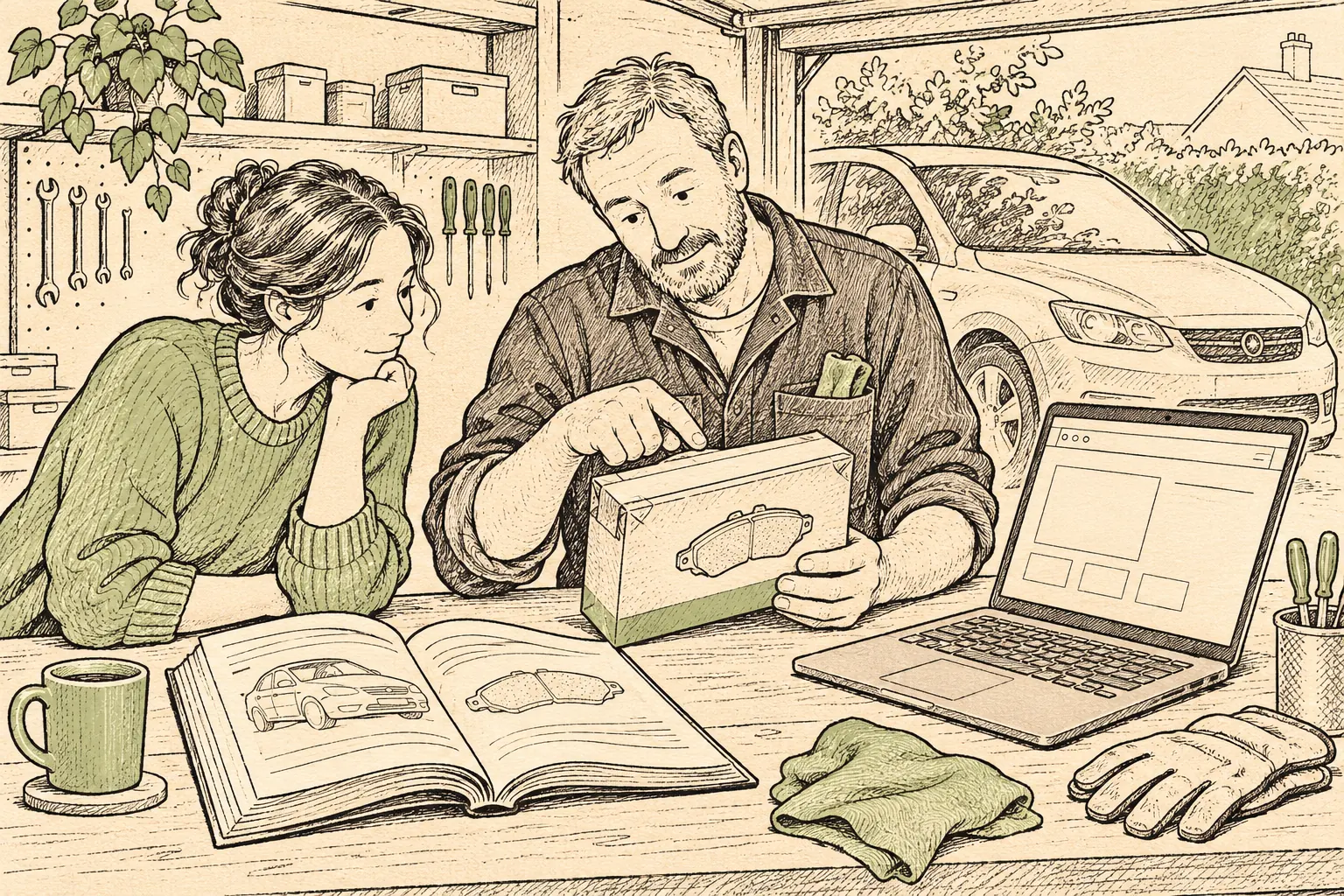
Take the part, packaging, listing and receipt to a garage you trust or the genuine manufacturer's authorised dealer or parts distributor. Ask whether the part is suitable for your exact vehicle and whether the brand offers an authenticity check. The IPO recommends expert help because a convincing imitation may be difficult to identify. Avoid relying on a seller's reassurance or a customer review alone. If a garage supplied and fitted the part, explain the concern to that garage and ask what it used; do not assume it knowingly supplied a fake.
Seek a remedy and report the concern
Keep the order confirmation, listing and photographs of the part and packaging. Tell the seller and marketplace why you believe the item may be fake, and ask for a remedy through their official process. Citizens Advice says buyers in England have refund rights for counterfeit goods; check the advice for your UK nation and payment method. The IPO says card buyers can ask their bank about chargeback. Report suspected counterfeit selling to Trading Standards through its official route; for new parts that may fail safety standards, GOV.UK gives a separate DVSA Market Surveillance Unit reporting route. Reporting a suspicion does not prove the seller committed a crime or secure a refund.
Your quick checklist.
Tick what you’ve done. This stays on this page.
0 of 3 markedDownload a short text copy to read without internet. It cannot call or alert anyone.
A few things explained.
Can a cheap part be genuine?
Yes. GOV.UK says low cost alone does not prove a part is fake, and legitimate aftermarket parts exist. It also warns that counterfeit parts can resemble genuine ones. Ask a trusted garage or the genuine manufacturer to check the part and its compatibility before use.
What if the part has already been fitted?
If it is a part whose failure could affect safety, stop relying on it until a qualified garage has assessed it and advised whether the vehicle is safe to drive. Explain the purchase and any symptoms without claiming the part is fake before it is checked. Keep the paperwork for any complaint or report.
Who should I report a suspected fake or unsafe part to?
The IPO advises reporting suspected counterfeit sellers to Trading Standards and notifying the marketplace. GOV.UK has a DVSA route for someone making or selling new vehicle parts that may not meet safety standards; that is different from reporting a defect in your own vehicle. For a refund, contact the seller and seek nation-specific consumer advice. A report is not proof of counterfeit goods or a guarantee of enforcement.