An unfamiliar carer is at my door. How do I check the visit?
Someone says they have come to provide your usual care, but you do not recognise them or were not told the visit had changed. A different worker is not proof of a scam: home-care agencies cannot always send the same person. CQC says a good agency tells you about a short-notice change so you know whom to expect. If the visit is unexpected, keep the person outside while you confirm it through the agency or council using a number you already trust. The check protects your home without treating a genuine worker as a suspect or leaving your care needs unresolved.
ishowcrime desk
Sources checked 25 November 2026
Here’s what you can do.
Pause at the door and check the visit
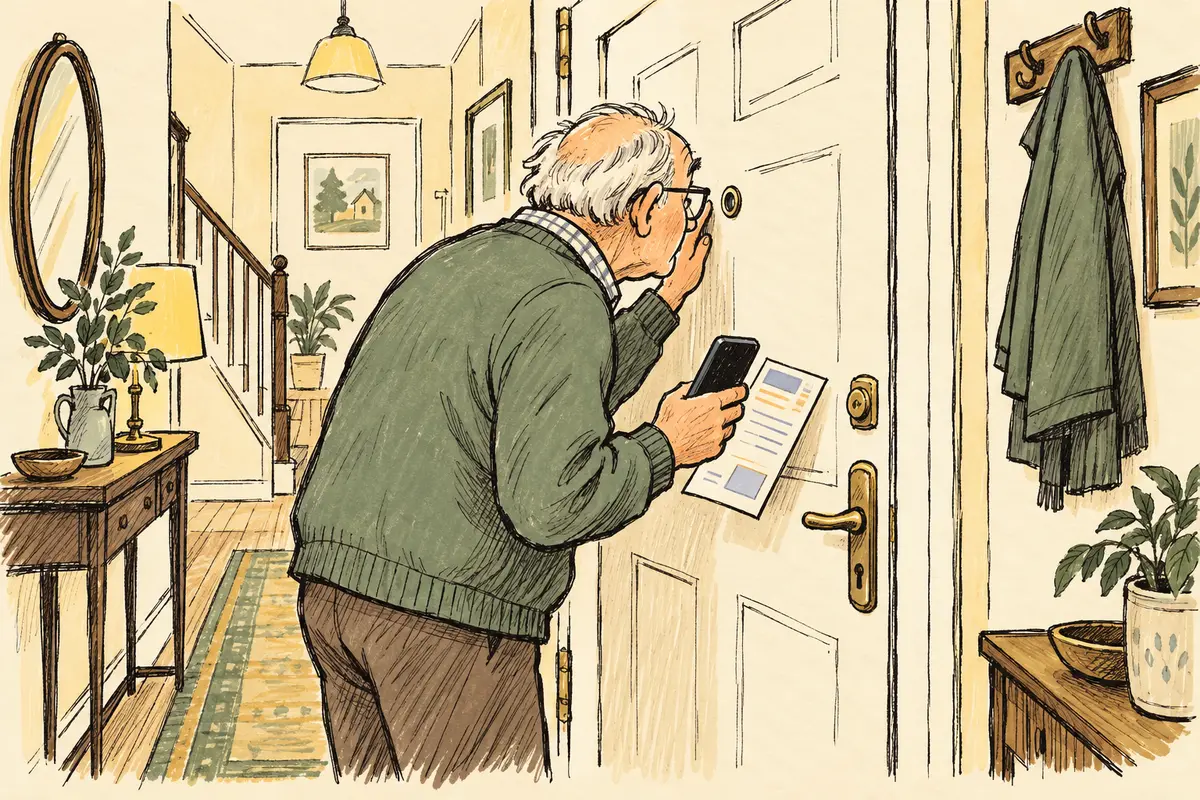
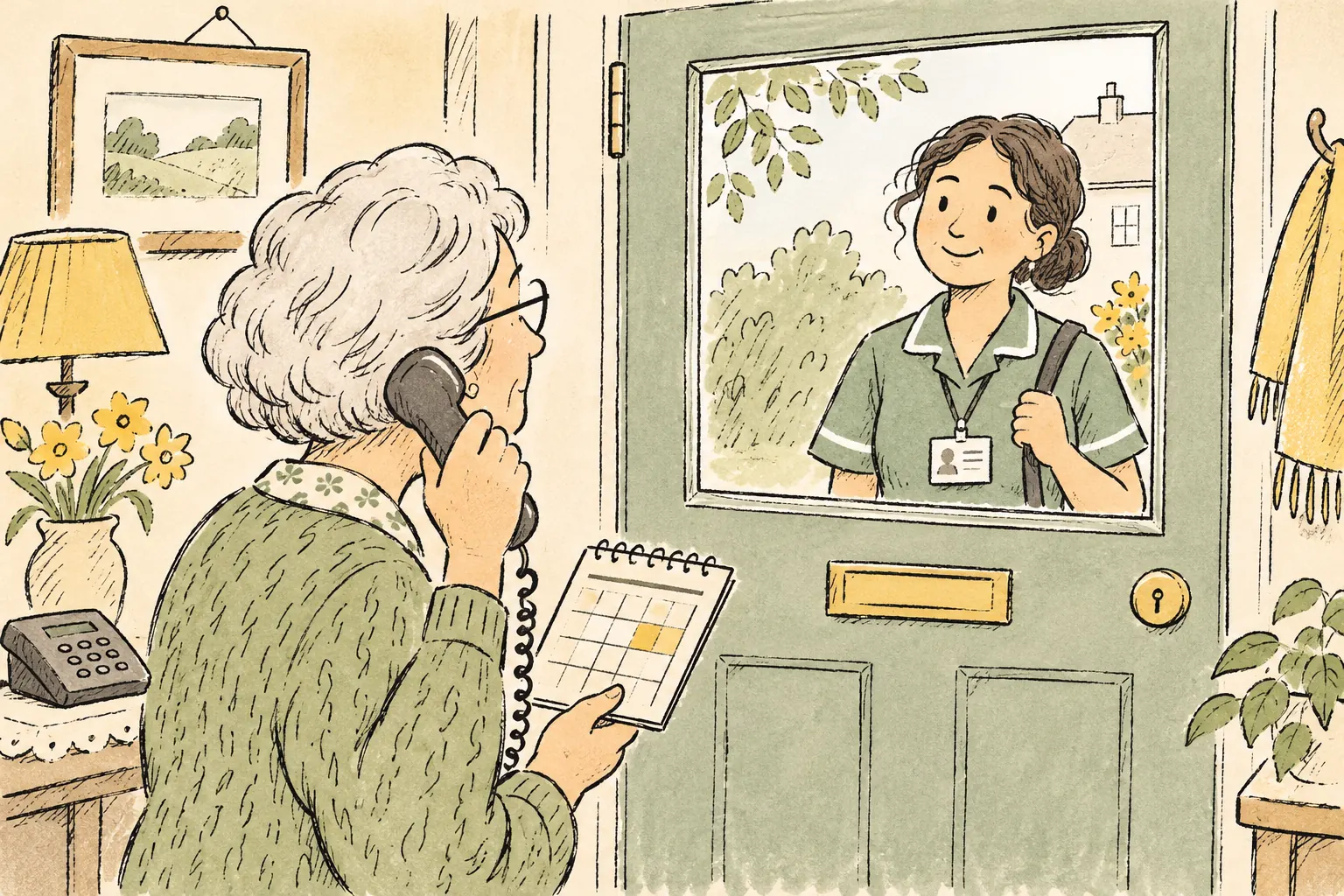
Speak through the closed door or an intercom. Ask the visitor for their name, agency and identity card, but do not rely on the badge alone. NHS guidance says agency carers should announce their arrival and bring an identity card. A worker who is new to you may still be genuine; the question is whether the agency sent them for this visit. Do not use a phone number supplied by the visitor. Police.uk advises contacting the organisation through a number you find independently and keeping the caller outside while you check. If you cannot confirm the visit, you need not admit the person to settle the uncertainty.
Call the agency or care arranger yourself
Use the agency number from your care paperwork, an earlier bill or its official website. Ask whether this named worker is due now, what care is planned, and how the agency will identify them. If the council arranged the care, contact your council care team if the agency cannot resolve it. CQC says a good home-care agency informs people when the person caring for them changes at short notice. If you need help with washing, meals, medicines or getting up, tell the agency clearly that the visit remains essential. Ask how a confirmed worker or another safe arrangement will provide it and when. Do not share a door code, spare-key location or banking details with an unverified caller.
Raise concerns and arrange safe care
If the visit was not authorised, note the time, description and what was said once you are safe. Tell the agency and the person arranging your care. If you believe a crime has happened, contact police; call 999 if a crime is happening now or someone is in immediate danger, and 101 for a non-emergency. If the person entered, you feel pressured or worry about abuse or neglect, ask your local council's adult safeguarding team for advice in England. You need not accuse a named worker or investigate alone. Explain what care you still need so the response does not leave you without support. If the concern is about the quality of a genuine home-care visit, use the council or agency complaint route as well.
Your quick checklist.
Tick what you’ve done. This stays on this page.
0 of 3 markedDownload a short text copy to read without internet. It cannot call or alert anyone.
A few things explained.
Can a different carer arrive for a genuine visit?
Yes. NHS says a home-care agency may not always send the same carer. CQC says a good agency should tell you about a short-notice change so you know whom to expect. A change without notice is a reason to verify the visit and ask the agency to explain it, not proof that the person at the door is an impostor.
What if I cannot reach the agency and need care soon?
Keep the visitor outside until the visit is confirmed. Try the agency's agreed out-of-hours contact or the council care team if it arranged your care. Tell them what support cannot wait and ask for a safe alternative and a clear time. If someone is in immediate danger, call 999. Do not assume a stranger's badge or urgency settles the identity check.
What if someone claiming to be a carer has already been inside?
You can still raise the concern. Write down what you know without deciding that a crime happened. Tell the agency and, if you are worried about abuse or neglect, your council's adult safeguarding team in England. NHS advises contacting police if you believe a crime may have been committed. Call 999 for immediate danger; otherwise use 101. Tell the care arranger if future visits need a safer plan.