Another driver blocks my car after an argument. What should I do?
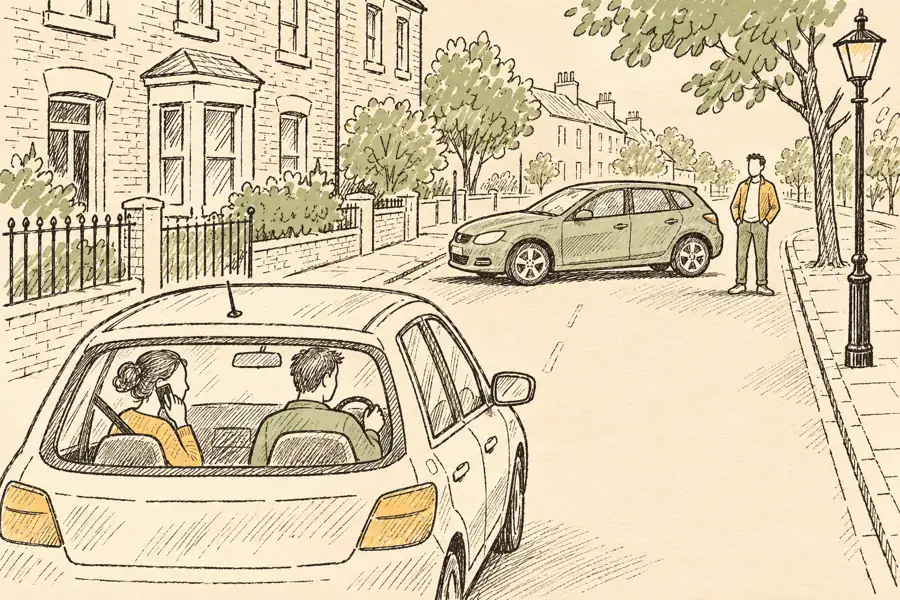
Imagine another motorist pulls across your lane after an argument and stops, leaving you unsure whether you can pass. You do not have to work out their motive or the exact offence at the roadside. Keep control of your car, avoid a risky manoeuvre and focus on getting help. If the person comes towards you or threatens violence, that changes how urgently you should call police. Once safe, explain both the driving and any threats; a road-traffic footage form may not cover the whole encounter.
ishowcrime desk
Sources checked 15 November 2026
Here’s what you can do.
Stay inside and avoid a confrontation
If a vehicle stops across your path, slow down and stop with room to manoeuvre only if it is safe. Do not try to push past the car, mount a pavement or enter oncoming traffic to escape. Keep your doors locked and windows closed. PSNI advises caution around aggressive drivers and says that, if you are forced to stop and the other driver approaches, you can use your lights, horn or car alarm to attract attention. This is a way to draw help, not an automatic police alert.
Get urgent help if the threat is happening now
If someone is threatening violence, there is immediate danger or a crime is happening now, call 999. Ask a passenger to call if there is one. If you are the driver, keep your attention on the road and do not use a hand-held phone while driving or queuing in traffic; GOV.UK allows an emergency 999 or 112 call if it is unsafe or impractical to stop. Tell the call handler where you are, what is blocking you and whether anyone has approached, threatened or been hurt. Follow their instructions rather than trying to settle the argument yourself.
Report the whole incident when safe
When the immediate danger has passed, write down the road, time, vehicle description, registration if you already saw it, and the words or actions you remember. Keep original dashcam footage if you have it; do not return to gather evidence or publish a clip of the person. Contact the local police force through 101 or its online reporting route for a non-emergency. Say whether the concern involved blocking, threatening behaviour, a driving offence or a collision. Police guidance says road-rage incidents should not be sent only through an Operation Snap traffic-footage form. Police will assess the circumstances and evidence; a report is not a promise of prosecution.
Your quick checklist.
Tick what you’ve done. This stays on this page.
0 of 3 markedDownload a short text copy to read without internet. It cannot call or alert anyone.
A few things explained.
Is blocking my car automatically a road-rage crime?
No single offence is called “road rage”. Depending on what happened, police may consider threats, damage or driving offences. Describe the actions and any danger rather than naming an offence yourself. If the vehicle is merely badly parked and nobody is threatening you, the circumstances and reporting route may be different.
Should I drive round the blocking vehicle?
Only if there is a lawful, clearly safe route and you can keep full control. Do not mount a pavement, enter oncoming traffic or drive towards a person to get past. If you cannot leave safely and feel threatened, remain inside, attract attention and call 999.
Can I send dashcam footage through Operation Snap?
Keep the original footage, but do not rely on a traffic-footage form alone for threats or violence. Gloucestershire Constabulary says its Operation Snap form is for traffic offences and directs road-rage reports to its online crime route or 101, with 999 for emergencies. Use the reporting route for the force where it happened and describe both the driving and the threat.