A parcel message asks for customs fees. How do I check it?
A text says your parcel is held at customs and asks you to pay for its release. Real import charges can apply, but HMRC warns about demands for duty on valuable parcels that do not exist. Check both the parcel and the request independently. If the message claims the goods have been seized, check that separately: a genuine seizure has its own notice and procedures.
ishowcrime desk
Sources checked 24 October 2026
Here’s what you can do.
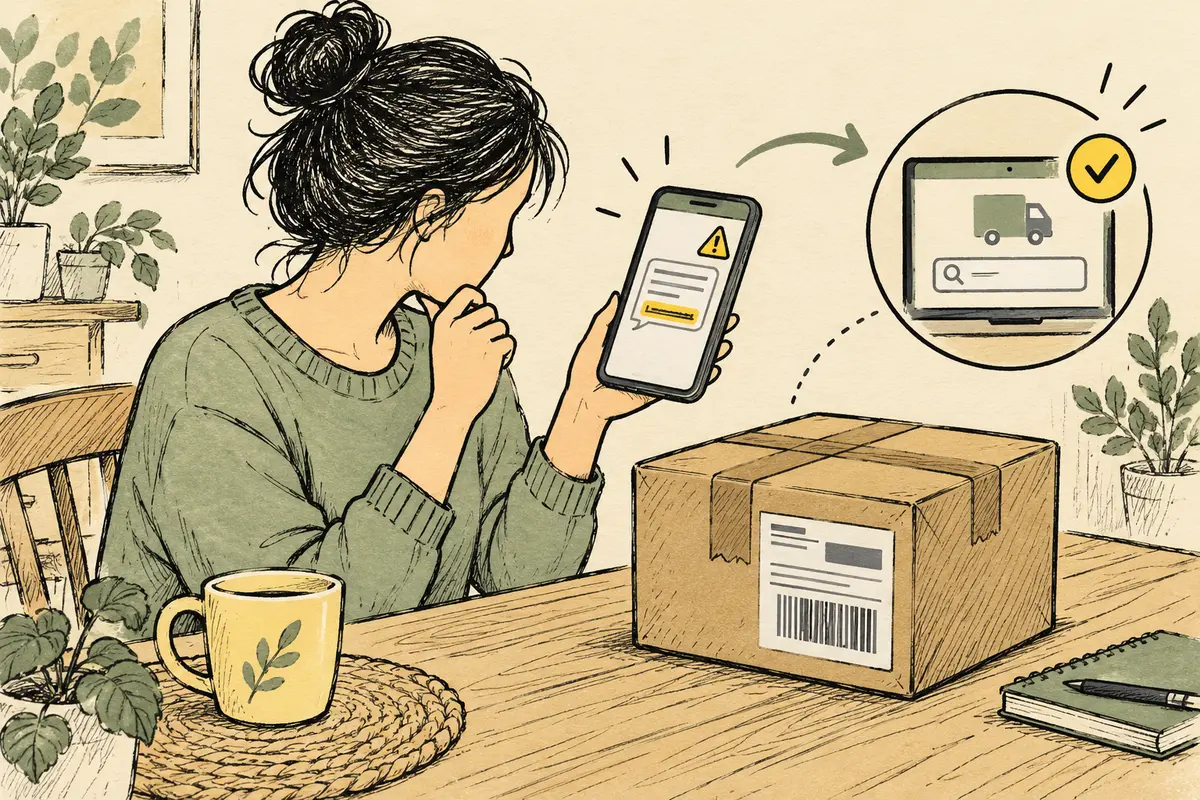
Check the parcel without the message link
Compare the claim with your order and tracking information. Do not open unexpected links or attachments, or reply with personal details. A demand for payment to release a parcel you know nothing about is a reason to pause, not to rush into paying.
Ask the real courier about the bill
Open the courier's official website or app yourself. GOV.UK says the delivery company sends a bill identifying VAT, duty or delivery charges. Match it to your parcel before paying. If the message says HMRC or Border Force has seized the goods, use the official seizure guidance below to find the correct organisation and checking route. A payment link alone does not establish that a seizure happened or that paying will resolve it.
Protect details already shared
If you supplied banking details or paid, contact your bank promptly. Change any password you exposed wherever reused. Forward suspicious HMRC texts to 60599, at your network rate, and emails to phishing@hmrc.gov.uk. If you disclosed personal information, tell HMRC which types, but do not repeat the private details in your report.
Your quick checklist.
Tick what you’ve done. This stays on this page.
0 of 3 markedDownload a short text copy to read without internet. It cannot call or alert anyone.
A few things explained.
Can a small parcel have charges, and what if the bill is wrong?
For non-excise goods sent from outside the UK to Great Britain, there is no Customs Duty at £135 or less. For purchases within that limit, the seller includes VAT. Gifts and excise goods have different rules; none of this proves a message genuine. For overcharged VAT or Customs Duty, GOV.UK points to form BOR 286 for Royal Mail or Parcelforce deliveries, or C285 for other couriers. Follow the tax-and-duty source below, not a message's refund link.
What if my parcel really has been seized?
For a customs seizure covered by HMRC's Notice 12A guidance, the seizure information notice or notice of seizure identifies the goods. Check the official guidance and contact the organisation responsible; HMRC and Border Force have different contact routes. Asking for goods back (restoration) and challenging whether the seizure was lawful are separate processes. A notice of claim challenging lawfulness must reach the relevant authority within one calendar month of the applicable seizure or notice date. Read the exact deadline and delivery requirements promptly in the official guidance below. Do not ignore a genuine notice while checking a suspicious text.
What if I opened a suspicious link or lost money?
On a computer, NCSC advises a full antivirus scan after opening a suspicious link, if you have antivirus software. Contact your bank about losses and report fraud through Report Fraud in England, Wales or Northern Ireland, or Police Scotland in Scotland. The NCSC source below links these reporting services.