I’m a local election candidate threatened at an event. What should I do?
At a public election meeting, someone moves from challenging your policies to threatening you or a colleague. Robust political debate is normal; threats to personal safety are different. You do not need to work out which offence, if any, has occurred before asking for help. In England, Electoral Commission guidance says an immediate, direct threat or urgent incident should go to 999, while other incidents can be reported through 101 or Police.uk. This guide focuses on a local-election candidate at an event, not on ordinary disagreement with a campaign.
ishowcrime desk
Sources checked 7 November 2026
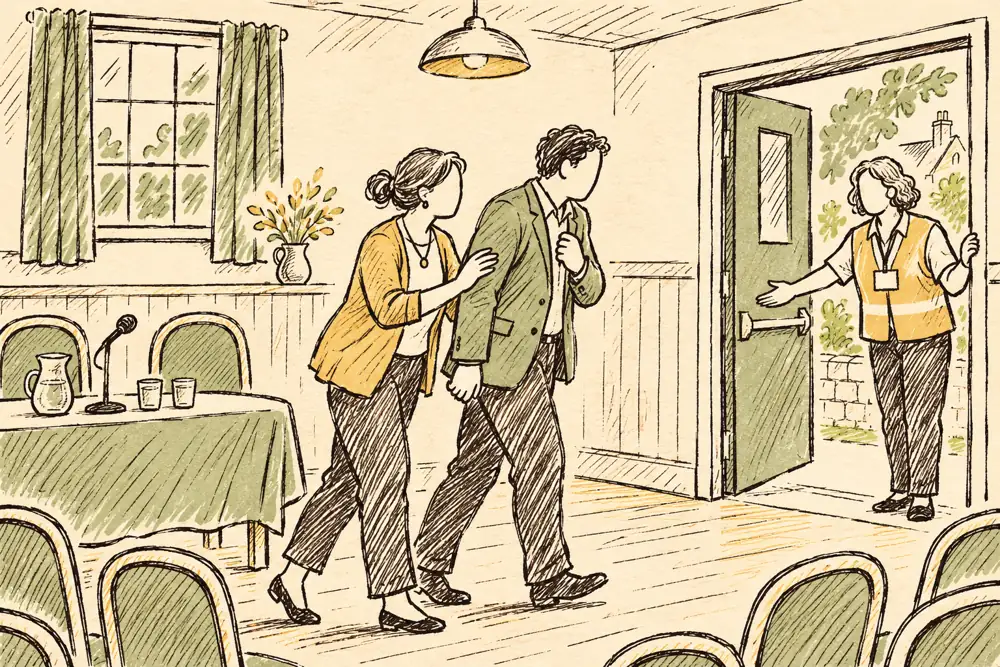
Here’s what you can do.
Move to safety and involve event staff
If a threat is immediate or the incident is ongoing and urgent, move away with your colleagues if you can and call 999. Tell venue staff or the event organiser where the concern is so they can help people leave or get assistance. Do not confront or pursue the person, and do not ask volunteers to restrain them. The Electoral Commission says candidates and staff should treat an immediate, direct threat to safety as a priority for emergency police help. A disagreement or sharp question alone is not the same as a threat.
Report what happened to the police
When the immediate danger has passed, report the threat or intimidation to the police even if you are unsure how it will be classified. For England local government elections, the Electoral Commission directs non-immediate incidents to 101 or Police.uk. Say where and when it happened, what was said or done, and whether staff or witnesses can help. Keep relevant messages or footage if it is safe to do so, but do not delay a report to gather everything. Ask for the incident reference so you can add information later.
Plan the next event with your campaign and venue
Tell your election agent or campaign team and the event organiser about the concern, sharing only the details needed for a safety plan. Review who will meet you, how to reach venue staff, the route out and whom to call if the situation changes. The Electoral Commission says candidates can ask the Returning Officer for briefing details they missed; the Cabinet Office links to current candidate-security guidance. These contacts can support planning but do not replace reporting threats to police. Do not publish a suspected person's identity or private details to mobilise others against them.
Your quick checklist.
Tick what you’ve done. This stays on this page.
0 of 3 markedDownload a short text copy to read without internet. It cannot call or alert anyone.
A few things explained.
Is a hostile question or criticism of my campaign a police matter?
Not necessarily. The Electoral Commission says robust political debate is part of democracy. If behaviour turns into threats, repeated unwanted contact or intimidation, contact police and describe exactly what happened. You do not need to choose an offence yourself.
Who should I call if the person has already left?
For an England local government election, the Electoral Commission directs incidents that are not an immediate, ongoing threat to 101 or Police.uk. Give the event details and ask for a reference. If a direct threat resumes or danger becomes immediate, call 999.
Can the Returning Officer deal with the threat instead of police?
The Returning Officer can provide candidate briefing information, and your campaign and venue can help plan future events. They do not replace a police report about threats or intimidation. Use the police route for the incident itself.