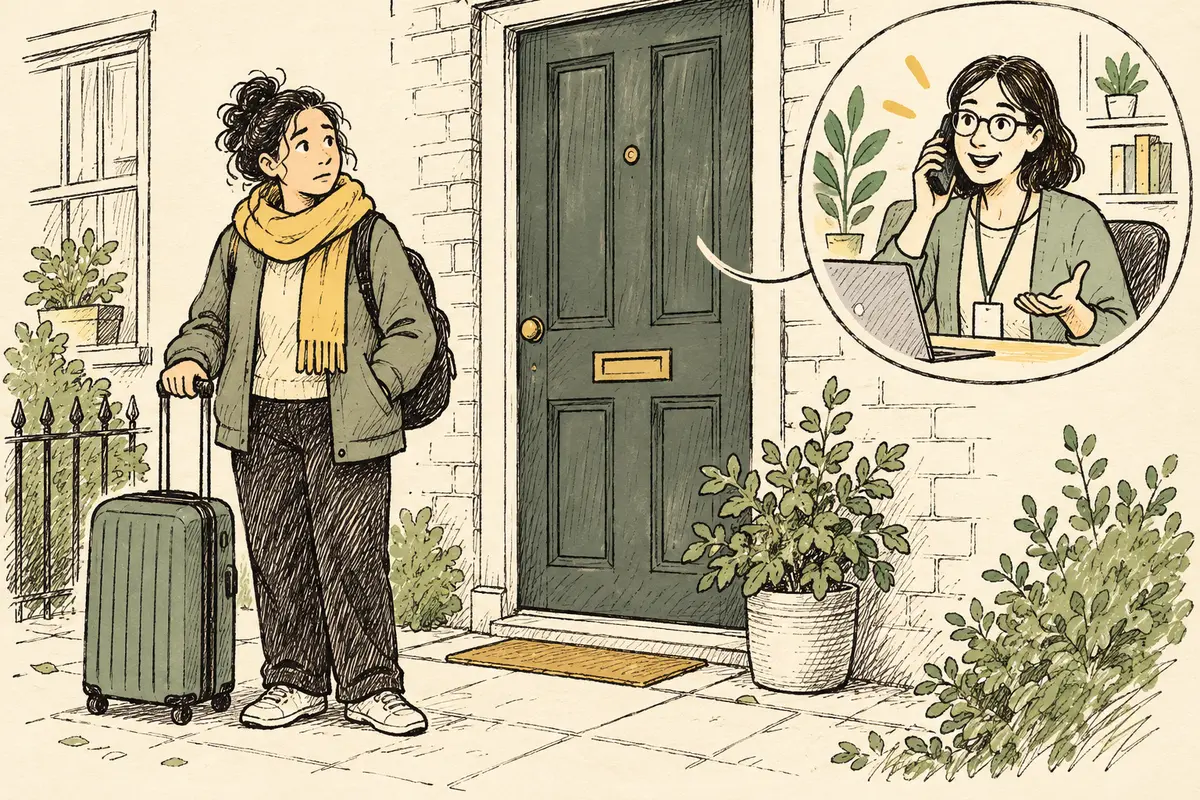
My live-in landlord wants me to leave. What rights do lodgers have in England?
A live-in landlord says you must leave your room, perhaps by the weekend. The word ‘lodger’ alone does not settle your rights. In England, sharing a kitchen, bathroom or living room with the landlord usually makes you an excluded occupier, who can normally be evicted after reasonable notice without a court order. A person who lives in the landlord’s home but does not share living space may have basic protection and a different process. Check your arrangement promptly; threats or violence are never a normal way to make someone leave.
ishowcrime desk
Sources checked 14 November 2026
Here’s what you can do.
Check how you share the home
Look at who lives in the property, which rooms you share with the landlord or their family, your agreement and how often you pay rent. GOV.UK says sharing a kitchen, bathroom or living room in a resident landlord’s home usually points to excluded-occupier status. Living in that home without sharing living space may mean basic protection. A fixed term and its early-ending clause can also matter. Show the agreement and the actual living arrangements to Shelter, Citizens Advice or a housing adviser rather than relying on the label printed on the document.
Check the notice and stay safe
For an excluded occupier on a rolling arrangement, the landlord normally must give reasonable notice. GOV.UK says this usually matches the rent-payment period: weekly rent often means at least a week. Notice need not usually be written, though your agreement may say otherwise. After valid notice or the end of a fixed term, a landlord may peaceably change the locks without a court order, but must allow reasonable time to collect belongings. For an occupier with basic protection, GOV.UK says written notice of at least four weeks is needed and a court order is required if you do not leave. Do not confront someone who threatens you. Call 999 for immediate danger; use 101 for a non-emergency police report. Keep notices and messages if safe.
Get housing help before you lose the room
If the notice seems too short or you think the eviction is unlawful, contact the local council’s housing team promptly. GOV.UK directs lodgers there for concerns about notice or illegal eviction. If you may have nowhere to move within eight weeks, tell the council you may be threatened with homelessness and ask for an assessment. A lockout, or a home that is unsafe because of violence or abuse, may also mean you are legally homeless. The help offered depends on your circumstances and eligibility; emergency accommodation is not guaranteed. Ask Shelter England or a legal adviser to check your status and options. Keep your agreement, rent records and any notice together. If belongings remain inside after a lawful lock change, arrange a safe way to collect them rather than forcing entry.
Your quick checklist.
Tick what you’ve done. This stays on this page.
0 of 3 markedDownload a short text copy to read without internet. It cannot call or alert anyone.
A few things explained.
Does my live-in landlord always need a court order?
No. In England, an excluded occupier who shares living space with a resident landlord can usually be evicted peaceably after the required notice or when a fixed term ends, without a court order. If you live in the landlord’s home without sharing living space, you may have basic protection: GOV.UK says the landlord needs a written notice to quit of at least four weeks and a court order if you stay. An adviser should check your actual arrangement.
Is a verbal notice enough, and how long is reasonable?
For many excluded occupiers, notice does not have to be written unless the agreement requires it. GOV.UK says reasonable notice usually follows the rent-payment period, such as a week for weekly rent. Shelter notes that the agreement, fixed term and circumstances can affect the answer. Ask for written confirmation to avoid confusion, but do not assume a verbal notice has no effect.
What if the landlord changes the locks while my belongings are inside?
If an excluded occupier’s agreement or valid notice period has ended, a peaceful lock change while they are out can be lawful. GOV.UK says the landlord must allow a reasonable time to collect belongings. If you dispute the notice, cannot get your possessions, or face threats or violence, contact the council and seek housing advice; call police for threats or immediate danger. If you cannot get into your home or have nowhere safe to stay, ask the council about homelessness help. Do not force entry or assume every lock change is a crime.