My missing dog appears in an online advert. What should I do?
You have found a dog for sale online that looks like your missing pet. A similar coat or photograph is not proof it is your dog, and an advert does not prove theft. But the listing could give police a useful lead. Save what you can see before it changes, and let the police assess it. Do not arrange a meeting to recover the dog yourself. For example, an advert might show a distinctive marking you recognise. Keep the listing link and images, then compare them with your own photographs and microchip details. If the seller asks for money to return your dog, tell police rather than paying or confronting anyone.
ishowcrime desk
Sources checked 13 November 2026
Here’s what you can do.
Save the advert without contacting the seller
Record the web address, seller profile, listing date, contact details shown publicly, photos, price and any distinctive features. Take screenshots that include the advert and date. Compare them with your own recent photos and microchip number, but remember a resemblance is not certain identification. Do not accuse the seller online, reveal private details or try to meet them. The listing may disappear or change, so sharing a clear record with police is more useful than an argument.
Tell police and your microchip database
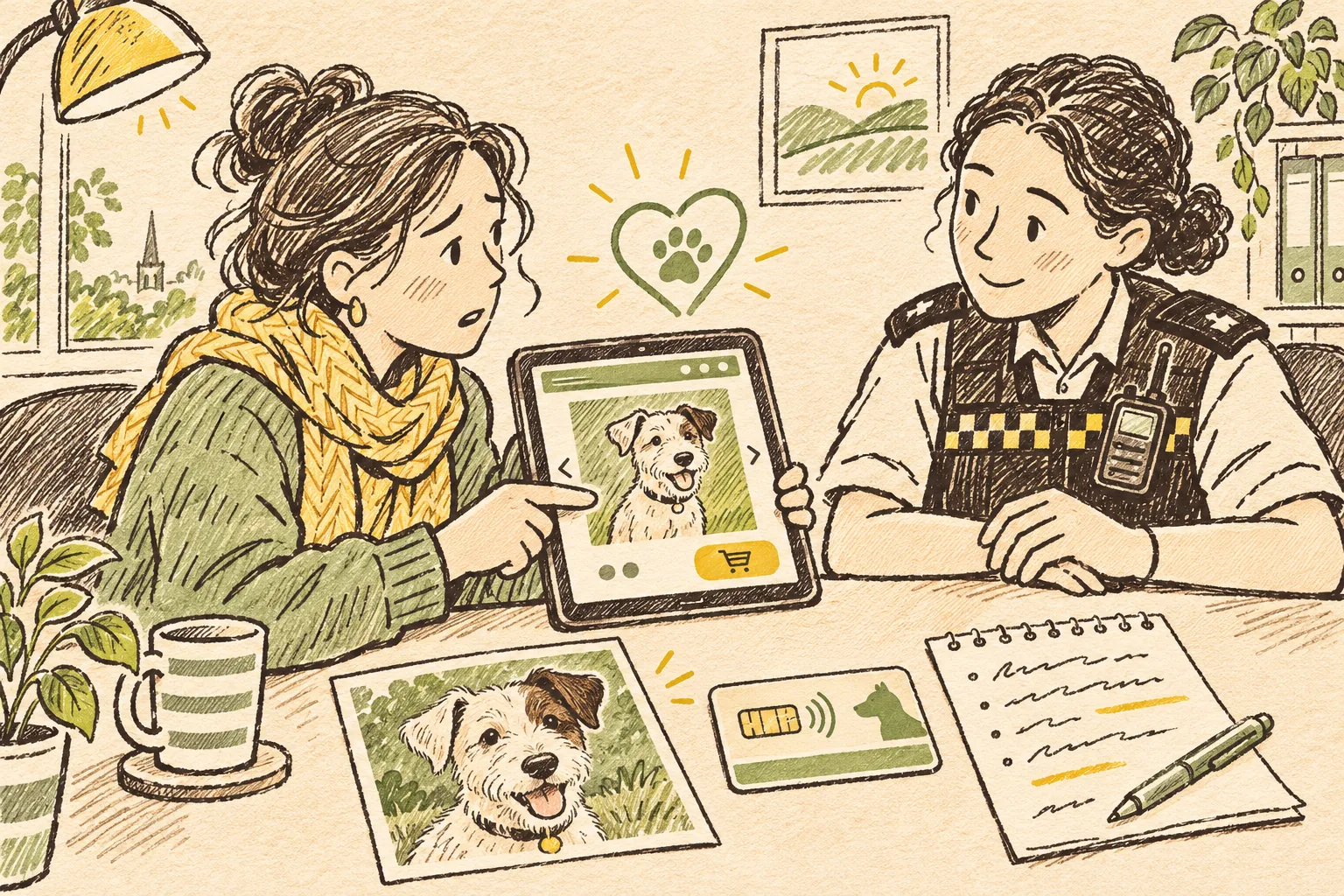
If you believe your dog was stolen, report it to your local police force and get a crime reference number. If you already reported the disappearance, update that report with the advert and your reasons for recognising the dog. Give police your dog's description, microchip number, when and where it went missing and any possible witnesses. Contact the microchip database to mark the dog missing or stolen, and check your contact details. These records can help identify and reunite the dog if it is found and scanned.
Keep searching through safe routes
Tell local vets, rescue centres and the council dog warden that the dog is missing. A missing-dog service can also help spread accurate details. Dogs Trust advises notifying police immediately if you find a possible sale advert. North Yorkshire Police warns against paying a ransom or meeting someone claiming to have your pet without liaising with the officer handling the case. If there is an immediate threat to a person, call 999; otherwise use your force's online reporting route or 101. Update police and the microchip database if your dog is recovered.
Your quick checklist.
Tick what you’ve done. This stays on this page.
0 of 3 markedDownload a short text copy to read without internet. It cannot call or alert anyone.
A few things explained.
Should I message the seller to check if it is my dog?
Do not arrange a meeting or attempt to recover the dog yourself. Preserve the listing and pass it to police. North Yorkshire Police specifically advises against meeting someone claiming to have your pet without liaising with the officer on the case.
What if I am not sure it is my dog?
Report the listing as a possible lead, not a proven theft or identification. Compare distinctive markings with your photos and give the police your dog's microchip number. A photograph alone can be misleading or copied.
What if someone asks for money to return my dog?
Do not pay a ransom. North Yorkshire Police advises contacting police about such demands. Save the messages and pass them to the officer or reporting channel, without trying to confront the sender.