My neighbour keeps threatening or targeting me. Who can help?
A neighbour repeatedly threatens you at your door, or someone in a group occupying a shared entrance makes it hard to get home. A noisy gathering is not itself a crime, but threats need attention. Get somewhere safe rather than trying to force your way past. In England, report threats to police and tell the council or social landlord about behaviour in or near the building. Keep a simple record when safe; you need not collect evidence before asking for help. If persistent anti-social behaviour has been reported and the response is not working, an anti-social behaviour case review may offer a further route.
ishowcrime desk
Sources checked 15 November 2026
Here’s what you can do.
Put safety before the dispute
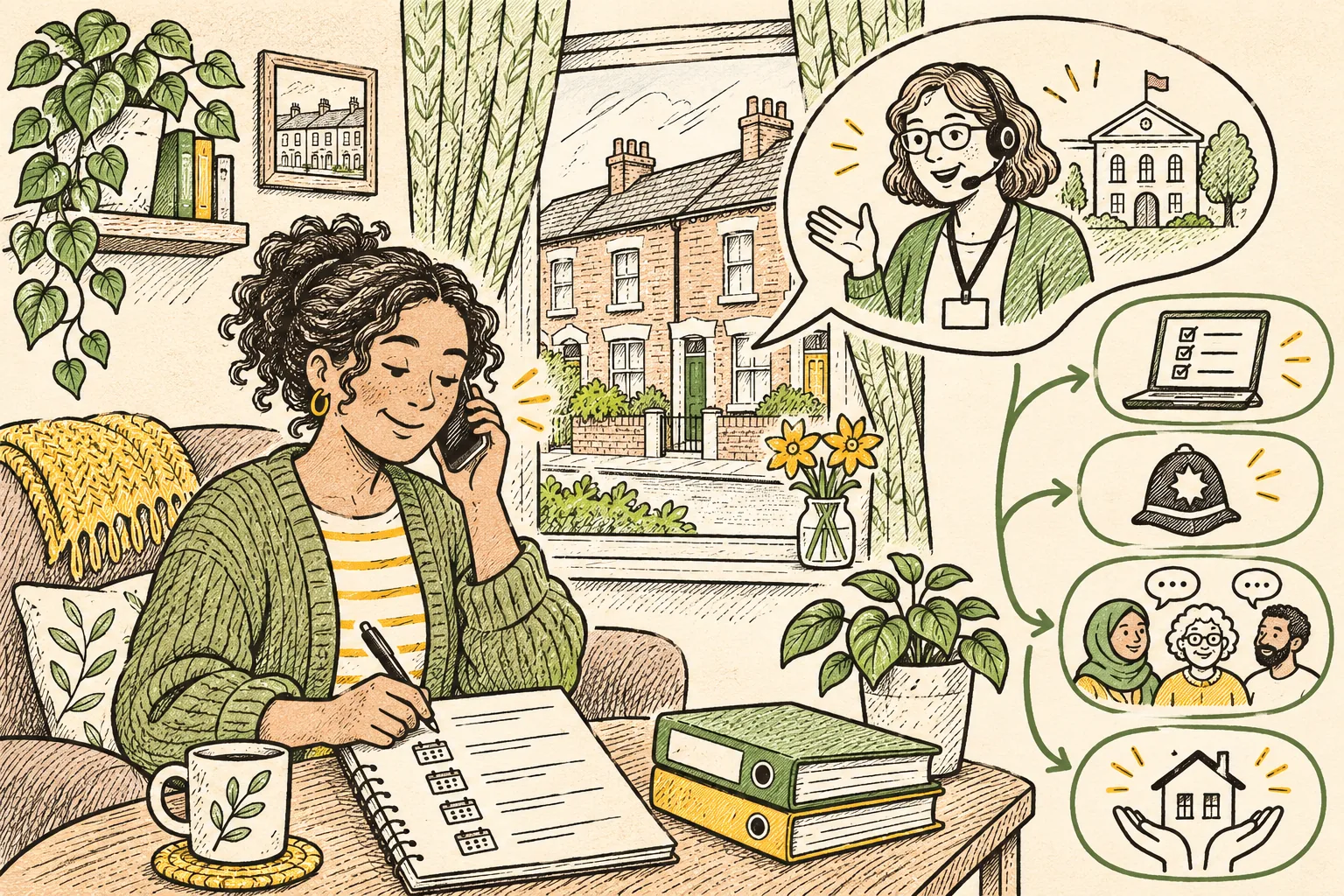
If a neighbour or group is threatening you at your door or in a shared entrance, move to a safer place if you can. Do not push past them to prove you can get home or go to anyone's door to settle the dispute. Call 999 if someone is in immediate danger or a crime is happening now. For threats without immediate danger, use the police's online route or 101 and explain exactly what happened. A group in a communal space is not automatically committing a crime; police can assess the words and behaviour, while the landlord can address use of the space.
Note the pattern without delaying a report
When safe, note the date, time, place, what was said or done, and whether anyone saw it. Mention if the same people return or block access again. Keep messages you already have, but do not delay a police report to make a diary. GOV.UK's social-housing guidance says residents should not photograph or film other people unless an agency handling the case asks them to; the agency can advise on safe evidence gathering. Ask for the reference for each report so you can explain the pattern later.
Use the route that fits what happened
Tell your council or, if you rent from a council or housing association, your landlord about behaviour in or near the building. Social landlords in England are responsible for keeping communal areas under their control safe and clean; give them the location, dates and report references. Tell police about threats separately. If persistent anti-social behaviour has been reported and you are dissatisfied with the response, ask your council how to request an anti-social behaviour case review. This brings agencies together when the local threshold is met; it is not a promise that a particular action will follow, and a complaint about your landlord's service uses a separate route.
Your quick checklist.
Tick what you’ve done. This stays on this page.
0 of 3 markedDownload a short text copy to read without internet. It cannot call or alert anyone.
A few things explained.
Is loud music from a neighbour a police matter?
Usually start with your local council for noise. The Metropolitan Police says noise complaints are generally for councils, while a social landlord may also help if you rent from one. If the neighbour threatens or personally targets you, report that behaviour to police separately.
Do I need two incidents before asking police for help?
No. Police.uk says repeated behaviour, usually two or more incidents, may amount to harassment or stalking, but a single unwanted incident may still be another offence. Tell police what happened and let them assess it. You do not need to collect evidence before reporting.
What if I have reported repeated problems but nothing has changed?
Keep telling police about new threats and use 999 for immediate danger. For persistent anti-social behaviour, ask your council or police how the local anti-social behaviour case review works. The Home Office says it is a multi-agency review of responses when a local reporting threshold is met; the threshold cannot be set higher than three qualifying complaints, and some areas set it lower. A review is not the same as a complaint about a landlord's handling of your case. Social-housing tenants can complain to the landlord and, if still dissatisfied after its process, to the Housing Ombudsman. Keep your report references so the agencies can see what was previously raised.