A relative is pressuring me to sign financial papers. What can I do?
A family member puts a loan, property or other money document in front of you and insists you sign now. It may be a legitimate proposal, but pressure, secrecy or refusing to let you read it are reasons to pause. Signing can affect your money or home. You deserve time to understand the document and get advice from someone who is not part of the pressure. Suppose a relative says a signature is only a formality but will not give you a copy. Do not guess what it means. Ask for the full document and an independent explanation. If you already signed, seek advice promptly; the options depend on what you signed and what has happened since.
ishowcrime desk
Sources checked 13 November 2026
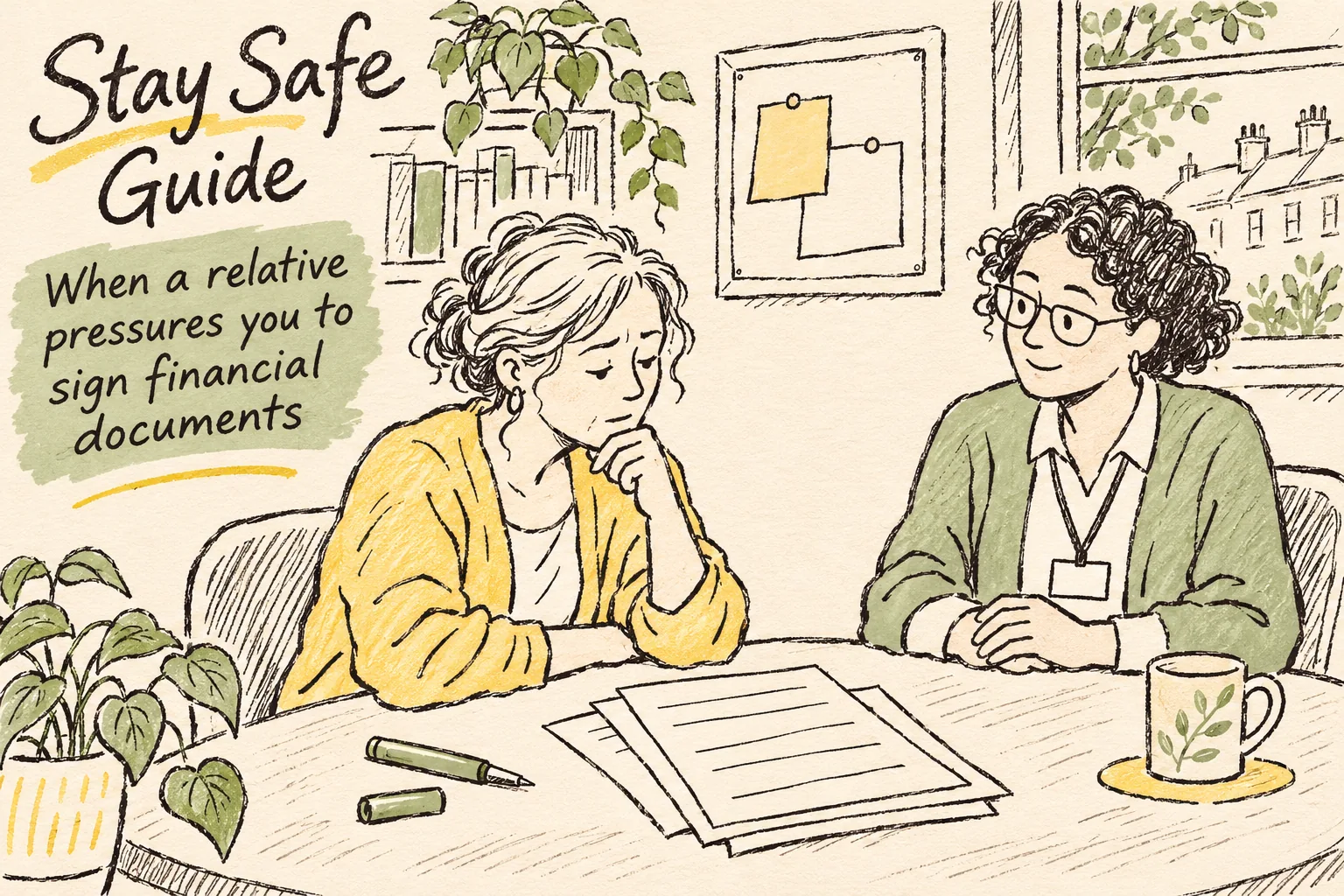
Here’s what you can do.
Pause and keep yourself safe
You do not have to decide while someone is demanding an answer. If safe, say you need time, keep the document and do not sign a blank page or a version you have not read. Pressure to change a will, sign documents or give away money can be a sign of financial abuse; it does not prove the proposed document is fraudulent. If refusing may put you at risk, put your immediate safety first and seek private help rather than arguing. Call 999 if someone is in immediate danger.
Find out exactly what the paper does
Ask for a copy and identify the organisation, account, property or debt it concerns. Speak privately with an independent solicitor or advice service before signing, especially if it could affect a home, loan, will or power of attorney. A relative who benefits from the decision is not an independent adviser. If the paper is from a bank or lender, contact that organisation using a number you find yourself and ask what it is being asked to process. Do not rely on an explanation from the person applying pressure.
Act promptly if you signed or money moved
Keep a copy, messages and a note of when and how the signature was requested, if doing so is safe. Contact the organisation named in the document promptly, say that you felt pressured and ask what it has processed and what can still be stopped. If bank access or money is affected, contact your bank through a trusted route. Seek independent legal advice about the document; do not assume a signature can automatically be cancelled. MoneyHelper lists financial-abuse support. In England and Wales, concerns about a registered attorney or deputy go to the Office of the Public Guardian; use the related guide for that distinct route. Tell police about threats or suspected crime: 999 for immediate danger, otherwise 101.
Your quick checklist.
Tick what you’ve done. This stays on this page.
0 of 3 markedDownload a short text copy to read without internet. It cannot call or alert anyone.
A few things explained.
Is every request from a relative to sign something financial abuse?
No. Families can make legitimate arrangements. The warning signs are pressure, secrecy, threats or refusing to let you understand the document. West Berkshire Council identifies pressure to sign documents or change a will as a possible form of financial abuse. You can ask for independent advice without first deciding what legal label applies.
Can I cancel something I signed under pressure?
Do not assume that signing makes it final or that it can always be undone. The answer depends on the document and circumstances. Contact the organisation involved promptly, explain the pressure, ask what has been processed and obtain independent legal advice. If it concerns a bank account or loan, tell the provider immediately too.
What if the person pressuring me already holds power of attorney?
That is a separate concern from the signature itself. In England and Wales, the Office of the Public Guardian accepts reports about the conduct of a registered attorney or deputy and says you can report even without every detail. The related guide explains that route. Contact police if there are threats or suspected crime; call 999 for immediate danger.