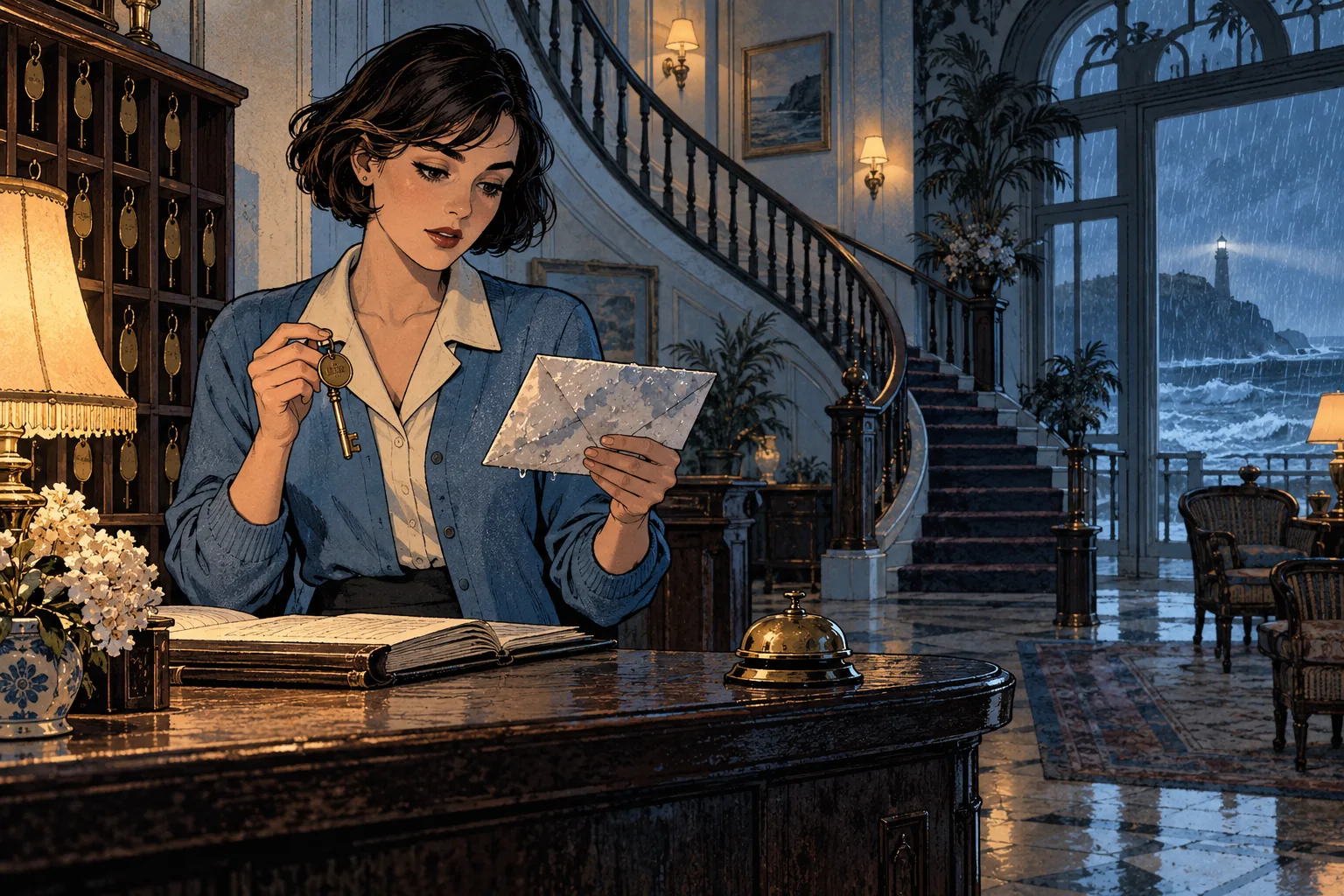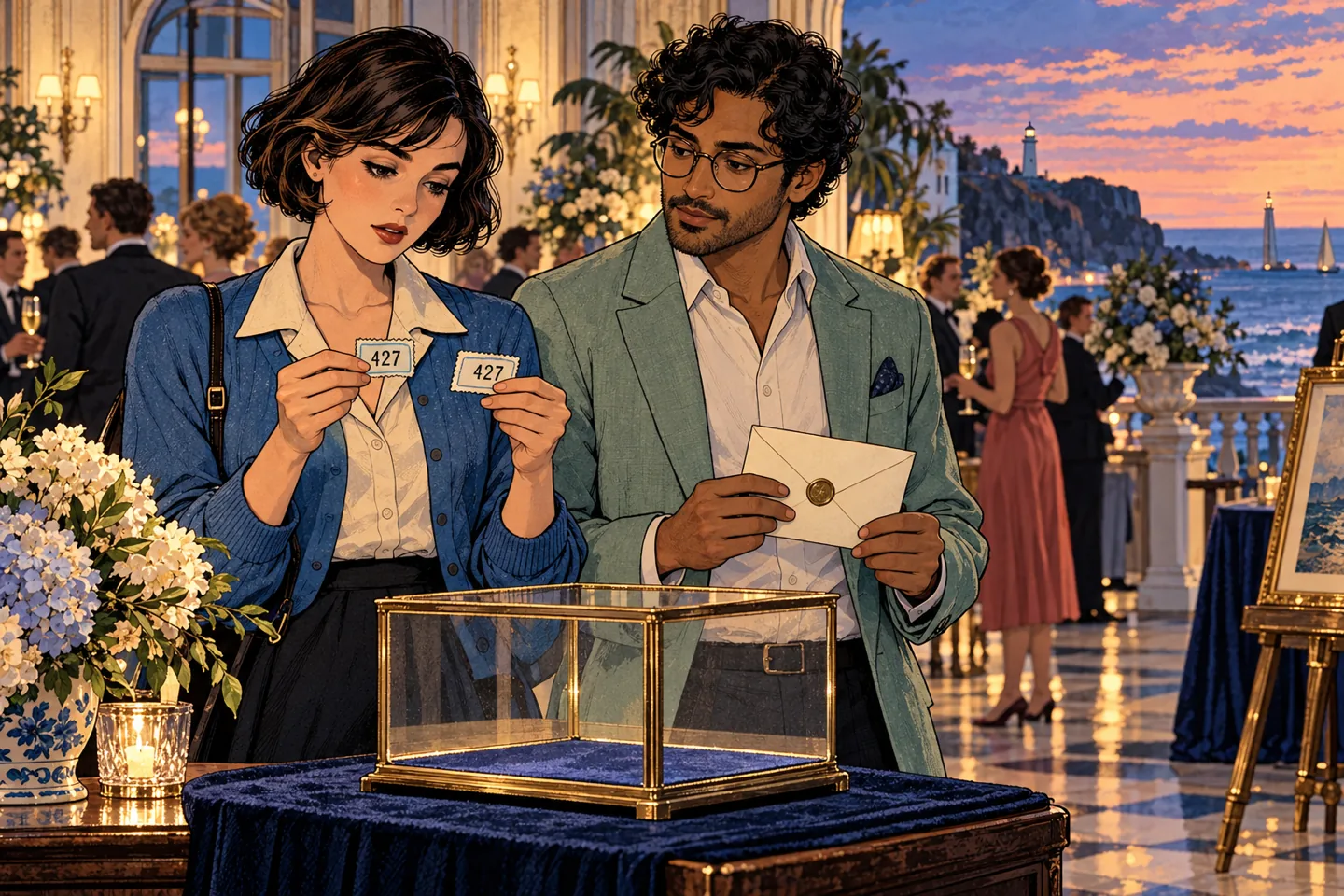
The auction catalogue promised a brass carriage clock. At six o’clock, the glass case held only the square of clean velvet where it had stood.
Mara found Inez at the ballroom doors, counting glasses. The hotel manager put down her clipboard when she saw the empty case. The evening was supposed to raise money for the town’s night shelter. Half the guests were already upstairs changing.
“Withdrawn,” said Ronan, the event contractor. He produced a collection slip. “The donor changed her mind. Her courier came at five.”
Inez looked at the signature. “Mrs Vale is dining here tonight. She could have told me herself.”
Dev arrived carrying the little envelope that held his restoration invoice. He had spent three afternoons making the clock keep time. His mint jacket still had a fleck of polishing compound on the cuff. When Ronan repeated the explanation, Dev asked who had packed it.
“The courier.” Ronan folded the slip before Dev could take a closer look.
At reception, Mara found another difficulty. A guest wanted a coat bearing ticket four hundred and twenty-seven. Four hundred and twenty-seven was still clipped to a different coat, and both claim tickets looked genuine. One guest began explaining, loudly, that she would know her own raincoat.
Mara asked them to describe what was in the pockets. The coats went to the right owners. She kept the tickets.
“That is not how a thief would steal a clock,” Dev said when she showed him. “We don’t know there is a thief,” Mara replied. “We know there is an empty case and someone who doesn’t want us to read a piece of paper.”
They took the tickets to the small office behind reception. Inez brought the current ticket book and last year’s auction folder. The hotel had accidentally put two partly used books into service. The duplicate numbers explained the coats. They explained nothing about the clock.
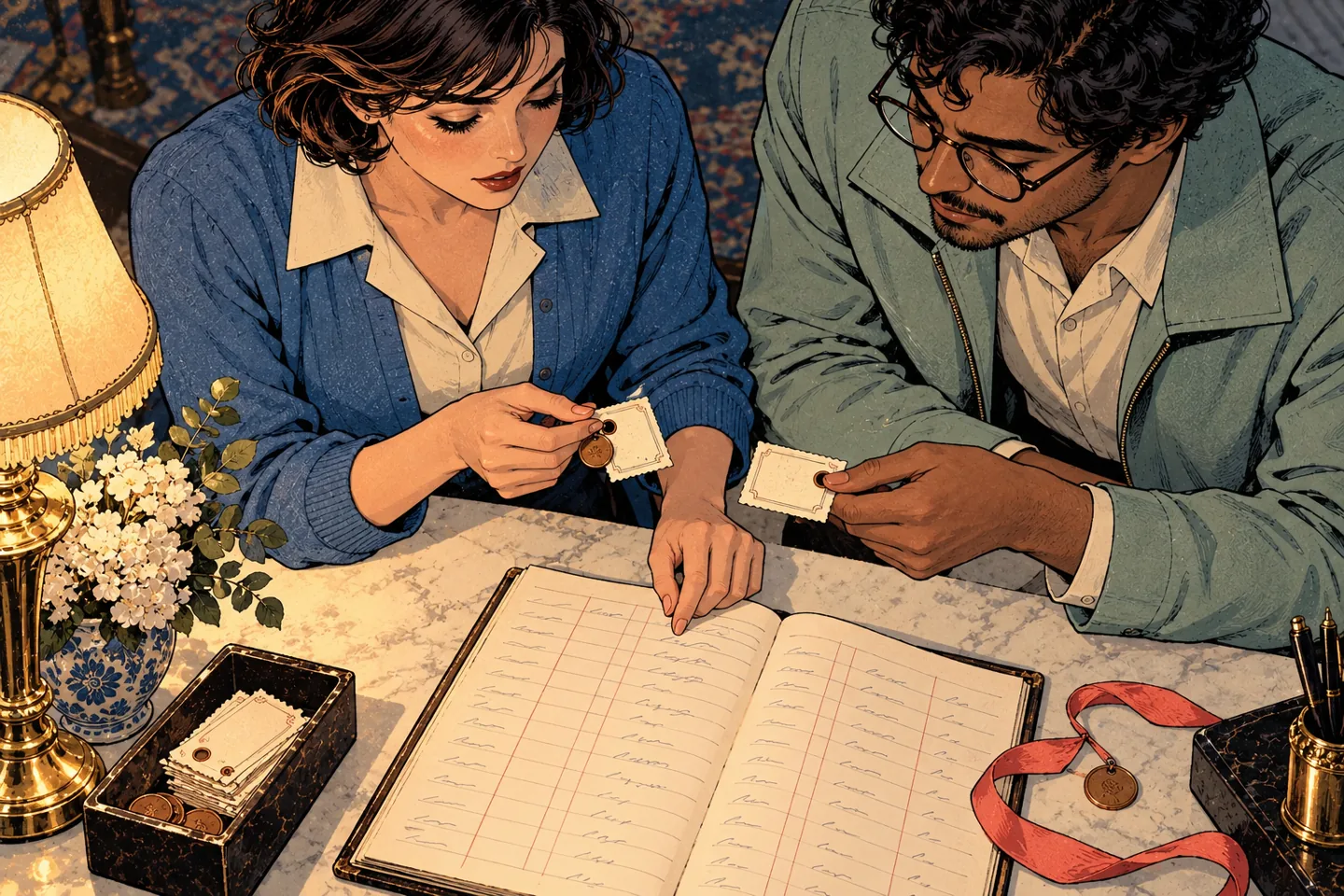
Mara placed both tickets beside the donation ledger. It was a useful disappointment. For ten minutes they had been following the most interesting-looking thing in the room instead of the thing that was missing.
Inez called Mrs Vale on the number already in the hotel’s records. The donor had not withdrawn the clock. She had not sent a courier. Inez asked her to stay where she was while they called the police.
Ronan was by the service entrance, winding cable around his elbow. Inez asked him to leave the collection slip with her. He said he had thrown it away. Mara remembered the fold disappearing into his breast pocket.
“Then leave the rubbish where it is,” Inez said. “And please don’t move anything else.” She did not block the doorway. She returned to reception and told the police exactly what she had seen.
Dev checked the photograph he had taken when he delivered the clock that afternoon. A small old dent marked one corner. Beside it, visible through the glass, was a repair label he had tied to the handle. He sent the photograph to Inez without cropping it.
The guests had begun coming down. Inez told them that one lot had been withdrawn while the hotel resolved a serious problem. The shelter’s representative asked whether the evening should be cancelled. “Let us finish what we can honestly finish,” Inez said.
When officers arrived, Mara showed them the delivery photograph, the donor’s contact details and the reception camera covering the service door. It had recorded Ronan carrying a wrapped object outside shortly after five. Mara did not pretend the wrapping proved what was inside.
The officers spoke to him. With his agreement, they looked in the van he had parked behind the hotel. The clock was in a padded box, its repair label still attached. The collection slip was in his jacket.
That did not make the rest of the evening simple. Officers took statements. Mrs Vale arrived and spoke with them. Dev identified the repair he had completed. By the time Mara returned to reception, the first raffle had finished and her tea was cold.
In the months that followed, the clock remained part of the police case. Ronan eventually pleaded guilty to its theft. Inez learned that a sale message recovered during the inquiry had helped establish what he intended to do with it. The hotel had supplied records; it had not needed a grand confrontation.
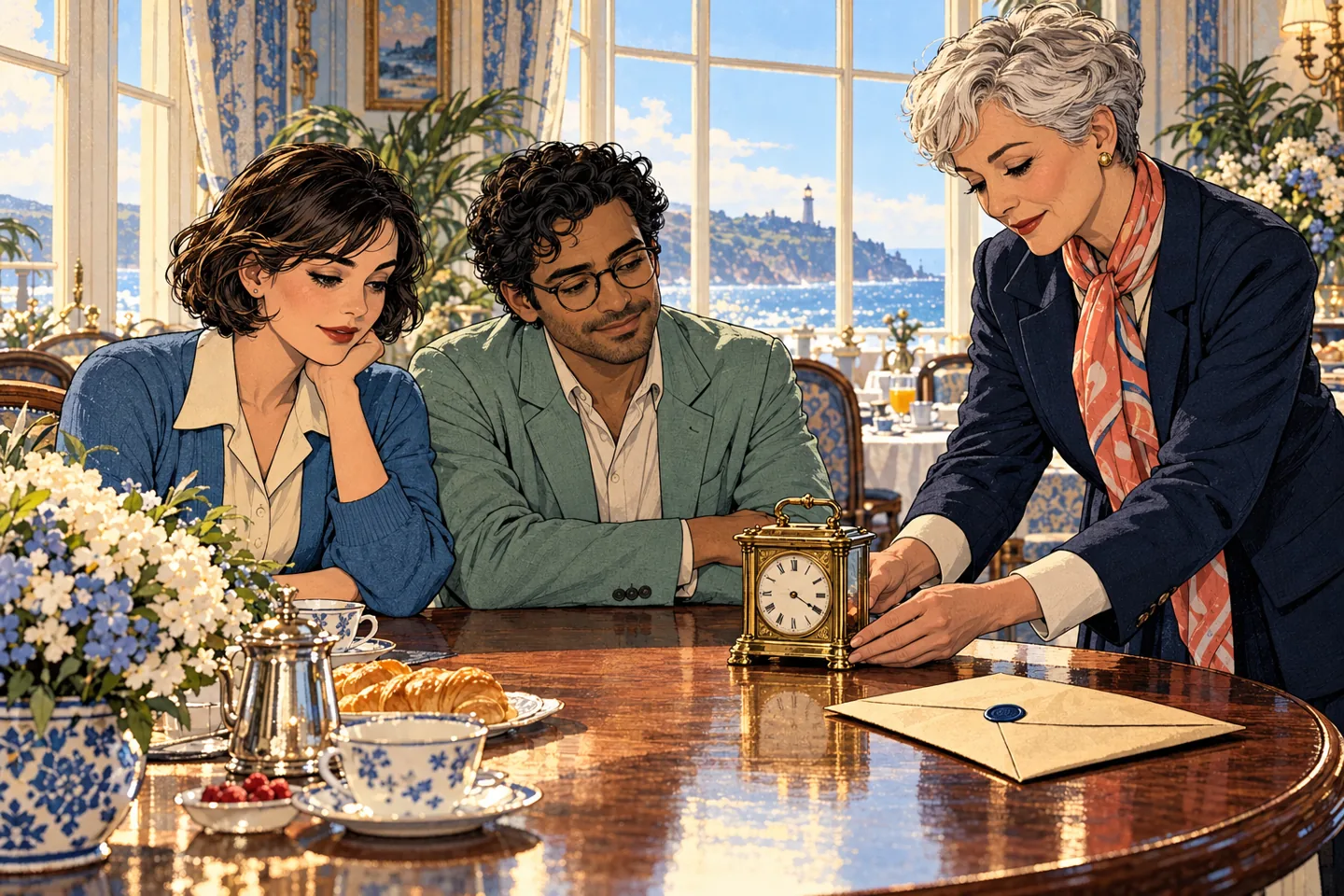
When the clock was returned, Mrs Vale asked for another auction. Dev checked its movement in the breakfast room while Mara opened the curtains. Inez put the records envelope away and carried in a fresh pot of tea.
“No numbered tickets this time,” Dev suggested.
“New tickets,” Mara said. “The old ones did nothing wrong.”
The clock sold that evening. Inez transferred the full proceeds to the shelter and pinned the receipt inside the office cupboard, where everyone working a shift could see it. On the shelf beneath it, Mara kept the two tickets marked four hundred and twenty-seven: a reminder that an odd detail could be a clue, or just two people wanting their coats.