A client threatens me during a home visit for work. What should I do?
Imagine you are partway through a repair or care visit when a client starts threatening you. With no colleague nearby, getting help may be harder. Abuse during a home visit for work is a workplace safety concern, including verbal threats even when nobody is physically hurt. This guide uses HSE guidance for Great Britain. It covers threats from clients or others at the property; our related exploitation guide covers threats from an employer.
ishowcrime desk
Sources checked 31 October 2026
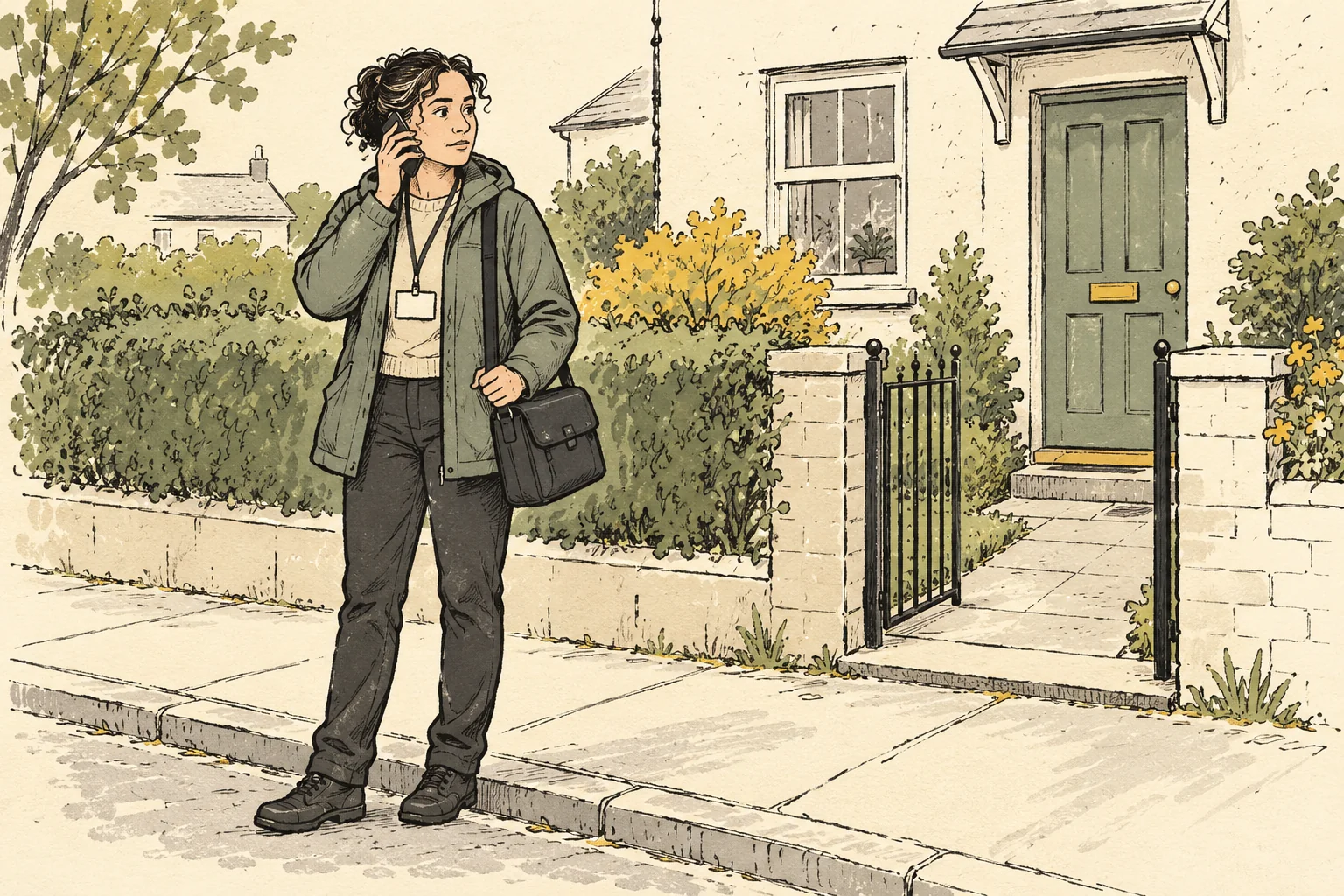
Here’s what you can do.
Agree the safety plan before visiting
Ask your manager about known risks at the address and whether the visit needs a colleague or a different setting. HSE's home-visit example stresses sharing relevant risk information, not leaving workers unaware. Agree who will know your location, when you will check in and what the emergency procedure is. Understand any alarm or phone system and the limits on work you can do alone. These arrangements give colleagues a way to notice a problem and respond.
Step away if the situation feels unsafe
Take verbal threats and threatening body language seriously. Keep space between you and the person; use a calm voice and avoid arguing. Follow your training and move away or leave if you can do so safely. Do not stay to prove that you can calm them down. Use the agreed emergency procedure if needed. Call 999 for immediate danger or a crime happening now, and for a life-threatening medical emergency. Explain your location and what has happened.
Record the incident and review the next visit
Once safe, tell your manager and make a brief record of what happened, when and who was involved. Include verbal abuse: you do not need to wait for an injury. Reports help your employer review the risks before another visit. For a non-emergency police report, use 101 or the official online route linked below. Ask for support afterwards, including any counselling your employer provides; threats can affect you even without a physical injury. If workplace safety concerns remain after raising them with your employer or representative, use HSE's reporting guidance below to find the appropriate authority.
Your quick checklist.
Tick what you’ve done. This stays on this page.
0 of 3 markedDownload a short text copy to read without internet. It cannot call or alert anyone.
A few things explained.
Will HSE tell my employer that I reported a safety concern?
HSE asks for your name and contact details so it can follow up. It says it does not give these personal details to the business, but the business may work out who reported the concern. If HSE follows up, it shares details of the issue. Information may also go to police or other enforcement bodies where the law requires it. Do not assume that reporting guarantees anonymity.
What if my manager treats abuse during home visits as part of the job?
Raise the risk with your employer, supervisor or trade union or health and safety representative. If concerns remain, HSE's linked 'Tell us about a health and safety issue' page covers England, Scotland and Wales. Use its authority checker first: some concerns belong with a council or another regulator. Prepare the location, organisation, who is at risk, what happened, how long the problem has lasted and any existing evidence. These details help HSE assess the concern. If you cannot use the online form, call 0300 003 1647 for help completing it; check the linked page for opening hours. This is separate from emergency help: call 999 for immediate danger.
Should I return alone to finish the visit?
Ask your manager to review what happened and the precautions needed first. HSE describes options such as a different meeting place or more than one worker attending a necessary home visit. The right arrangement depends on the risk; this guide cannot decide whether a particular visit is safe. If you were injured, get appropriate medical help. The NHS 999 page below explains emergency help and using NHS 111 if you are unsure.