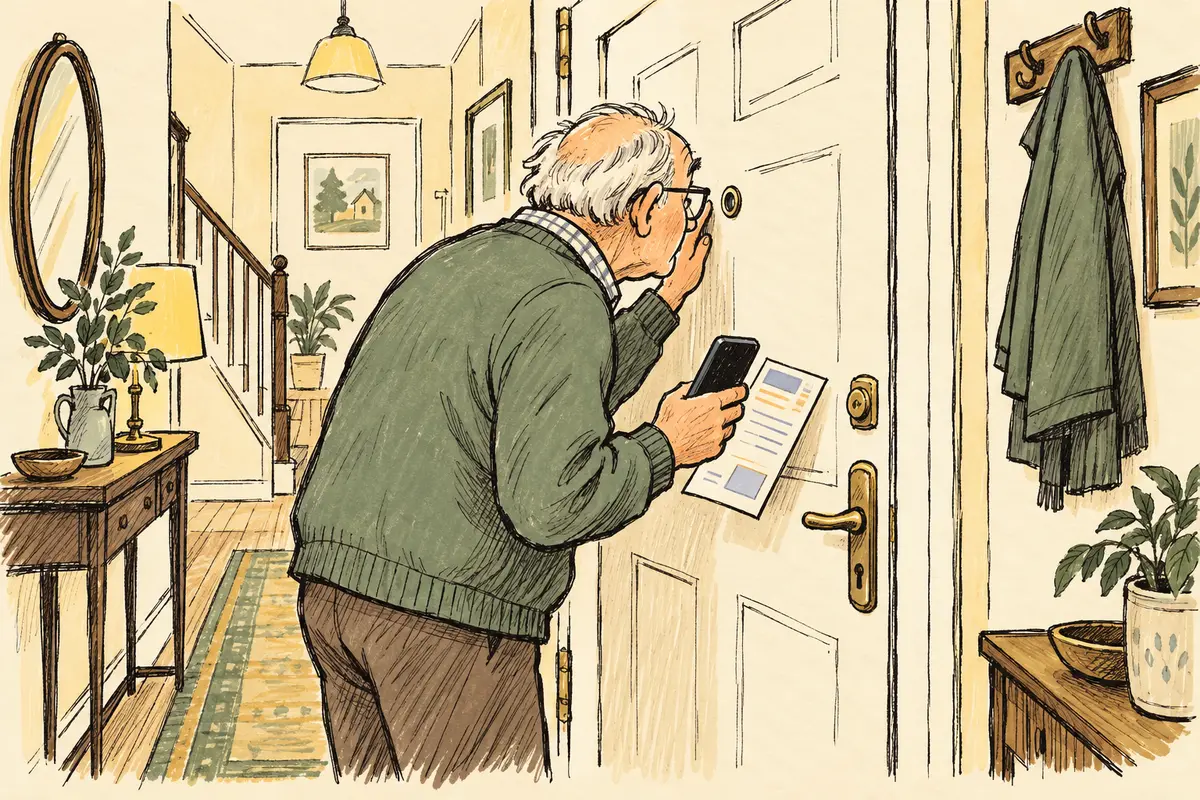
Someone at my door says they are a bailiff for an unfamiliar debt. What should I do?
A visitor says they are a bailiff and demands money for a debt you do not recognise. They may be a genuine enforcement agent with incorrect details, or someone falsely using the role to obtain payment. The demand alone cannot tell you which. In England, you can usually speak through a closed door while checking their identity, the creditor and the amount claimed. Do not ignore a genuine notice of enforcement: acting promptly can prevent further visits and costs.
ishowcrime desk
Sources checked 15 November 2026
Here’s what you can do.
Keep the conversation at the door
Ask the visitor to show ID and pass documents through the letterbox or show them at a window. GOV.UK says you usually do not have to open the door or let a bailiff in. Some debts, including unpaid criminal fines, have different last-resort entry powers, so do not assume every case is identical. If someone is in immediate danger or a crime is in progress, call 999. Do not pay into a personal account or share bank details merely because the visitor demands an immediate answer.
Check the person and the claimed debt separately
Ask for the visitor's name, company, proof of authorisation, the creditor and a detailed amount owed. GOV.UK explains how to check a certificated enforcement agent, High Court enforcement officer or court bailiff through the relevant register, association or court. Find the creditor's contact details independently and ask why it says you owe the money. A badge or official-looking notice alone is not proof. If the notice names someone else or the debt was paid, tell the creditor and enforcement company promptly and keep copies of evidence.
Act on the result and get help
If the claim is genuine, contact the creditor or enforcement company using verified details to discuss payment or dispute the debt; do not leave a real notice unanswered. Citizens Advice explains that an unfamiliar or already-paid debt should be challenged promptly, with copies rather than original documents. If you paid a suspected impostor, contact your bank immediately and report the suspected fraud to Report Fraud; tell police about immediate threats. If illness, disability, age or another circumstance makes dealing with an agent harder, ask for debt advice and explain your needs to the creditor and agent.
Your quick checklist.
Tick what you’ve done. This stays on this page.
0 of 3 markedDownload a short text copy to read without internet. It cannot call or alert anyone.
A few things explained.
Does an unfamiliar debt prove the visitor is fake?
No. It may be an error, a debt you did not know about or an impersonation attempt. GOV.UK says a genuine bailiff can collect specified debts, while anyone falsely claiming to be one commits fraud. Check identity and the creditor separately before deciding.
Can I ask for proof without letting the bailiff in?
Yes. GOV.UK says you can ask for identity and authorisation through the letterbox or at a window, even if the agent visited before. You usually do not have to open the door, but entry rules have exceptions. Seek urgent advice if a real notice or warrant describes a case you do not understand.
What if the notice is for someone else or I already paid?
Do not ignore it. Citizens Advice says to contact the creditor and enforcement company promptly, explain why you do not owe the debt and provide copies of evidence such as a paid receipt or a document showing you are not the named person. Ask for the case to be put on hold while they check; get debt advice if you need support.