Fireworks are being used dangerously in London. What should I do?
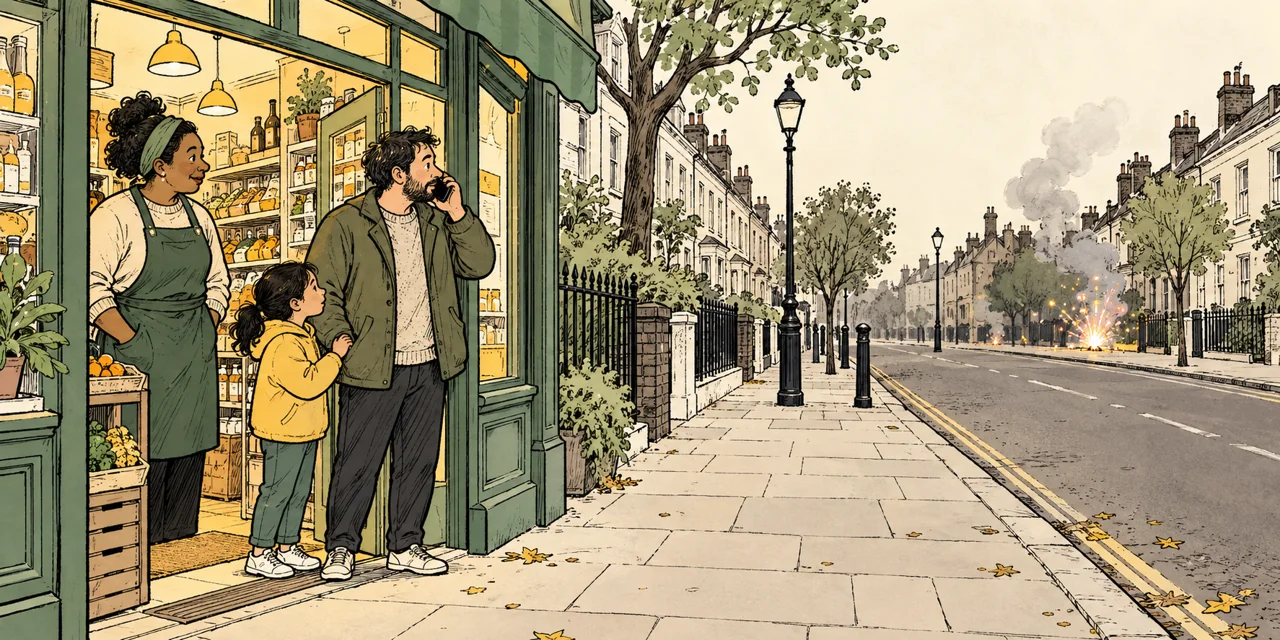
Fireworks are going off beside a busy pavement, and you are worried someone could be hurt. You do not need to wait for an injury before seeking emergency help. Fireworks can cause burns, start fires and damage property; being close to people or traffic changes the risk. This guide covers London. A distant display, repeated noise from a neighbour and fireworks being directed towards people need different responses. Explain what you can actually see, rather than assuming that every loud bang is a crime.
ishowcrime desk
Sources checked 31 October 2026
Here’s what you can do.
Move away from the danger
Keep yourself and children away from the fireworks. Move towards a safer place or nearby staff if you can do so safely; do not approach someone behaving dangerously to argue or collect evidence. London Fire Brigade says never to return to a firework once it has been lit. Do not pick one up or try to relight it because it appears to have stopped.
Call 999 for immediate danger or fire
The Met says to call 999 when fireworks are being used dangerously and could harm the public, for example near a road or in a crowd. Give the location, what is happening and whether anyone is hurt. If there is a fire, ask for the fire service and describe what is burning; do not assume somebody else has called. Follow the call handler's instructions. An online report is not an emergency response.
Use the right route after the immediate danger
For non-emergency misuse in the Metropolitan Police area, use the linked fireworks reporting route or call 101. Give the place, time, behaviour and any descriptions you already know. Do not put yourself at risk to obtain more details. Keep the report confirmation. For nuisance noise from a neighbour regularly setting off fireworks on their own property between 7am and 11pm, the Met directs people to their local council. Its noise-reporting page below links to the council finder. Illegal use causing a prolonged night of disturbance can be reported to police.
Your quick checklist.
Tick what you’ve done. This stays on this page.
0 of 3 markedDownload a short text copy to read without internet. It cannot call or alert anyone.
A few things explained.
What are the usual firework hours in London?
GOV.UK says fireworks must not be set off between 11pm and 7am. The cut-off is midnight on Bonfire Night and 1am for New Year's Eve, Diwali and Chinese New Year. Check your council for local rules. Being within those hours does not make dangerous street use acceptable; private individuals must not throw or set off fireworks in streets or other public places.
What if someone has a burn?
Once away from danger, cool the burn under cool running water for 20 minutes as soon as possible. NHS advice says cool bottled water or a wet towel can be used if there is no running water. Remove nearby clothing or jewellery, but leave anything stuck to the skin. Keep the rest of the person warm; if a child starts shivering, stop cooling and seek medical advice. After cooling, lay cling film loosely over the burn, not around it and not on the face. This is temporary protection while getting medical help, not a lasting dressing. Do not apply ice, creams, oils or butter. Call 999 or go to A&E for a very large or deep burn, or one on the face; these are examples, not the full NHS list. Do not drive yourself. Call 111 if unsure what to do. For a child under five, phone 111 rather than using 111 online. Do not delay emergency help for a serious injury.
Is an organised public display the same as street misuse?
No. London Fire Brigade recommends attending a public display rather than holding your own, and the Met distinguishes organised professional events from unauthorised public use. Follow the organiser's safety arrangements. If fireworks at any event pose an immediate danger, move away and seek emergency help; an organised setting does not mean you must ignore a concern.