My power bank is too hot to handle. What should I do?
Your power bank feels much hotter than usual while it charges a phone. Some warmth can be normal, but Electrical Safety First says to stop using a power bank that is too hot to handle. Heat alone does not prove it is counterfeit: a genuine product can also be faulty, damaged or recalled. Put safety before testing it again. Once it is safe to do so, check the exact model, contact the seller or manufacturer and report a product you think could harm someone.
ishowcrime desk
Sources checked 10 November 2026
Here’s what you can do.
Stop using it and deal with immediate danger
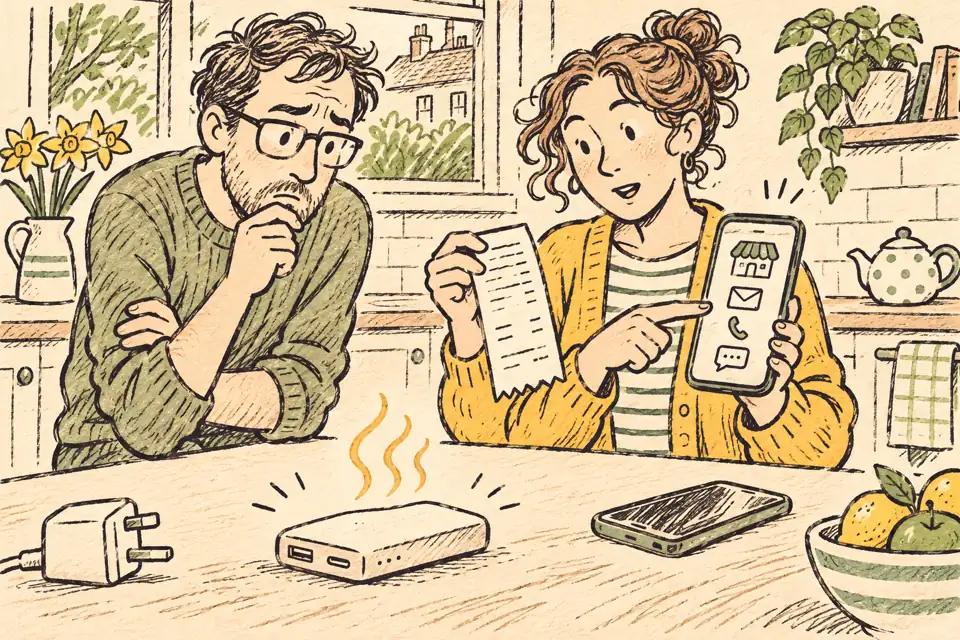
If it is too hot to handle, stop using it and unplug it from the charger if you can do so safely. Do not handle a smoking, sparking or leaking unit, open its casing or attempt a repair. Electrical Safety First says ordinary warmth during charging can happen, but excessive heat, swelling, odd smells and damage are warning signs. If there is a fire in your home, get out, stay out and call 999; do not stay to inspect the battery.
Check the model and contact the seller
When the immediate risk has passed, keep the order record, model details and photographs of the outside of the product if they can be taken safely. Check the manufacturer's support page and GOV.UK Product Recalls and Alerts for the exact model; a recall for a different power bank does not apply to yours. Tell the retailer or manufacturer about the heat and ask how it should be returned or handled. A low price, unusual label or heat may raise concern, but none alone proves counterfeiting.
Report the safety concern and arrange safe disposal
If you think the product could harm people, report it through the consumer product-safety route: Citizens Advice in England and Wales, Advice Direct Scotland in Scotland, or your local district council in Northern Ireland. GOV.UK says the report may be passed to Trading Standards or Environmental Health. Ask for consumer advice about a repair, replacement or refund; a report does not itself recover your money. If the product is to be discarded, do not put a power bank in ordinary household waste or normal recycling. Ask your local recycling service how to handle a damaged lithium battery.
Your quick checklist.
Tick what you’ve done. This stays on this page.
0 of 3 markedDownload a short text copy to read without internet. It cannot call or alert anyone.
A few things explained.
Is a warm power bank always dangerous?
No. Electrical Safety First says many power banks warm naturally during charging or discharge. If it becomes too hot to handle, stop using it and unplug it if safe. Swelling, damage, odd smells, sparks or smoke are further warning signs. Do not keep testing it to decide whether it is faulty.
Does overheating mean my power bank is counterfeit?
No. Heat is a safety concern, not proof about who made it. Genuine products can be recalled too. Check the exact make, model and any serial or batch details against the manufacturer's information and GOV.UK's recall list. Keep the listing and purchase records if you suspect the product was misdescribed; Citizens Advice has separate guidance on counterfeit purchases in England.
Where do I report it, and can I get my money back?
GOV.UK directs unsafe-product reports to Citizens Advice in England and Wales, Advice Direct Scotland in Scotland, and the local district council in Northern Ireland. The report can help the authorities assess the risk but does not itself secure a refund. Contact the seller about the problem and ask a consumer adviser about your rights. In England, Citizens Advice explains refund rights if the item is established as fake; other consumer rights may apply to a faulty product.