How can I prepare an emergency kit without overspending?
A storm interrupts the electricity, so the cooker, heating and internet may stop working together. An emergency kit helps you manage that disruption. The government's Be Ready advice, published on 22 October 2026, asks households that can do so to prepare for three days, helping responders prioritise people who need more support. Start with your circumstances and what you already own.
ishowcrime desk
Sources checked 23 October 2026
Here’s what you can do.
Check first, then buy gradually
Look through your cupboards and list only what is missing. Add affordable items during ordinary shopping trips instead of buying everything at once. Choose long-life food your household normally eats that needs neither cooking nor refrigeration. Set a six-month reminder to review dates, replace items and check whether your needs have changed. This helps avoid duplicate purchases and forgotten supplies.
Make the kit fit your household
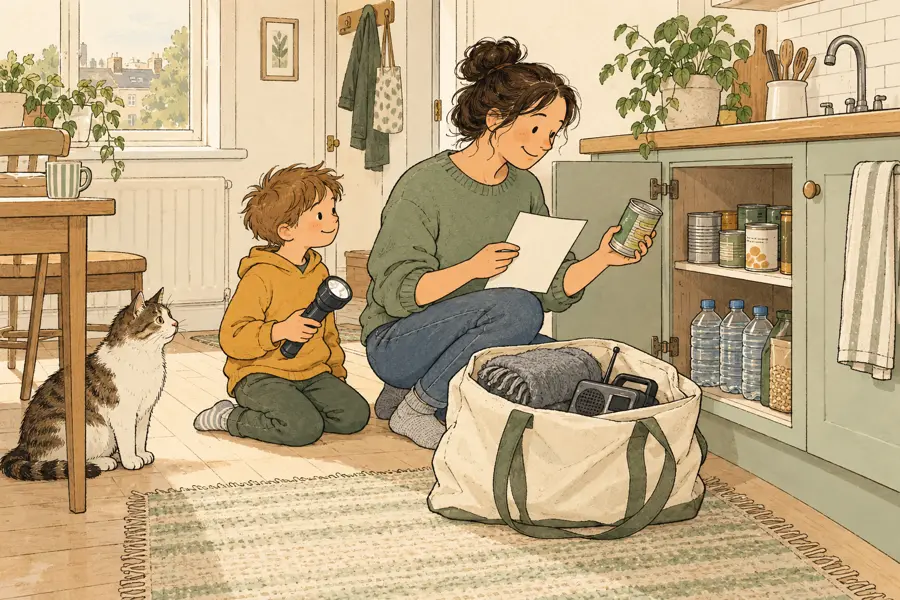
Ready Scotland's checklist includes three days of food and bottled water, a torch with spare batteries or a wind-up torch, radio, phone charger, blankets, hygiene supplies, first-aid items and important documents. Include essential medication and information, baby or pet supplies, and equipment needed for a disability or health condition. Keep the kit somewhere safe and accessible. Check the drinking-water amount below; a general kit does not cover every person's needs.
Make a plan that costs nothing
Write important contacts on paper and agree who would collect children or check on a neighbour. Keep essential documents protected. These steps help if phones or online records are unavailable. If you need additional help because of age, disability, illness or another eligible circumstance, contact your energy supplier and network operator about their Priority Services Registers. Describe your needs, including any powered medical equipment; support is not limited to older people.
Your quick checklist.
Tick what you’ve done. This stays on this page.
0 of 3 markedDownload a short text copy to read without internet. It cannot call or alert anyone.
A few things explained.
How much bottled water should I plan for?
Be Ready specifies three litres per person per day for drinking, for three days. That is nine litres per person in total. Water for cooking and washing is additional. Start gradually within your means; the guidance recognises that not everyone can complete every step.
What can I do if I cannot afford a full kit?
Start with the free steps: make a household plan, write down contacts and organise useful items you already own. You can build supplies over time. Eligible households can join the free Priority Services Register for additional utility support. In England, Scotland and Wales, check the Be Ready link for registration; Northern Ireland uses Customer Care Registers. Being unable to buy a full kit is not a personal failure.
What should I do if the power has already gone off?
In Great Britain, call 105 to reach the electricity network's power-cut service; in Northern Ireland use 03457 643643. Follow your provider's updates and official local advice. Use the linked no-signal guide if your phone cannot connect. For immediate danger, call 999 rather than waiting for an outage update.