Cars seem to race near our crossing in London. What can we do?
Cars repeatedly accelerate past a crossing near your home, and you worry they may be racing. From the pavement, you may not know their speed or whether a race is taking place. The Metropolitan Police distinguishes street racing from other vehicle nuisance, but both can put people using the road at risk. Keep yourself and children away from the kerb while it is unsafe. Report an immediate danger to police; for repeated concerns, use the Met's vehicle-nuisance route and consider Community Roadwatch.
ishowcrime desk
Sources checked 15 November 2026
Here’s what you can do.
Move away from the danger
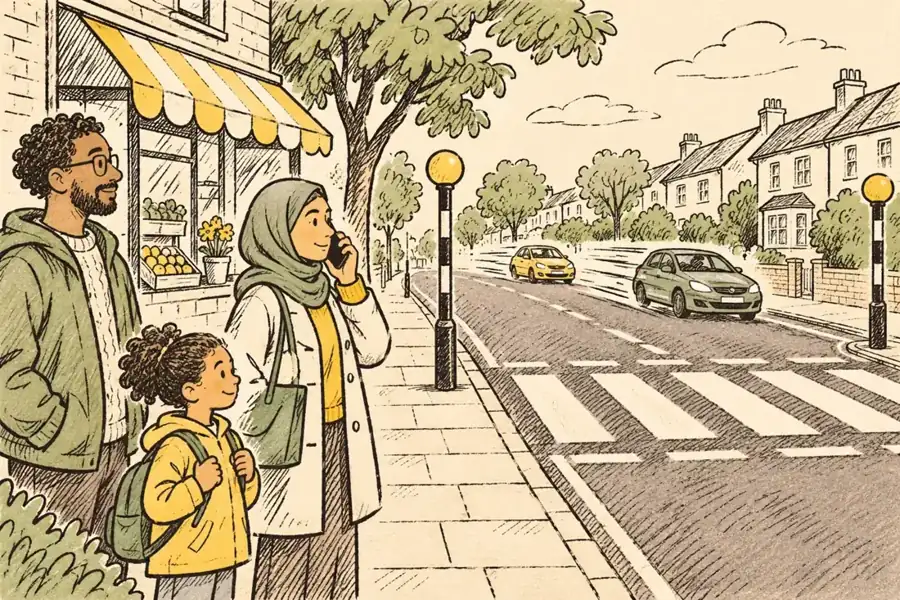
Stay on the pavement and keep children away from the kerb. At a zebra crossing, wait until traffic has stopped in both directions or the road is clear before crossing; do not assume a driver will stop. If the driving creates immediate danger to someone, call 999 from a safe place and tell the operator where it is happening. Do not step into the road to block a car, confront a driver or chase a vehicle.
Report what you actually saw
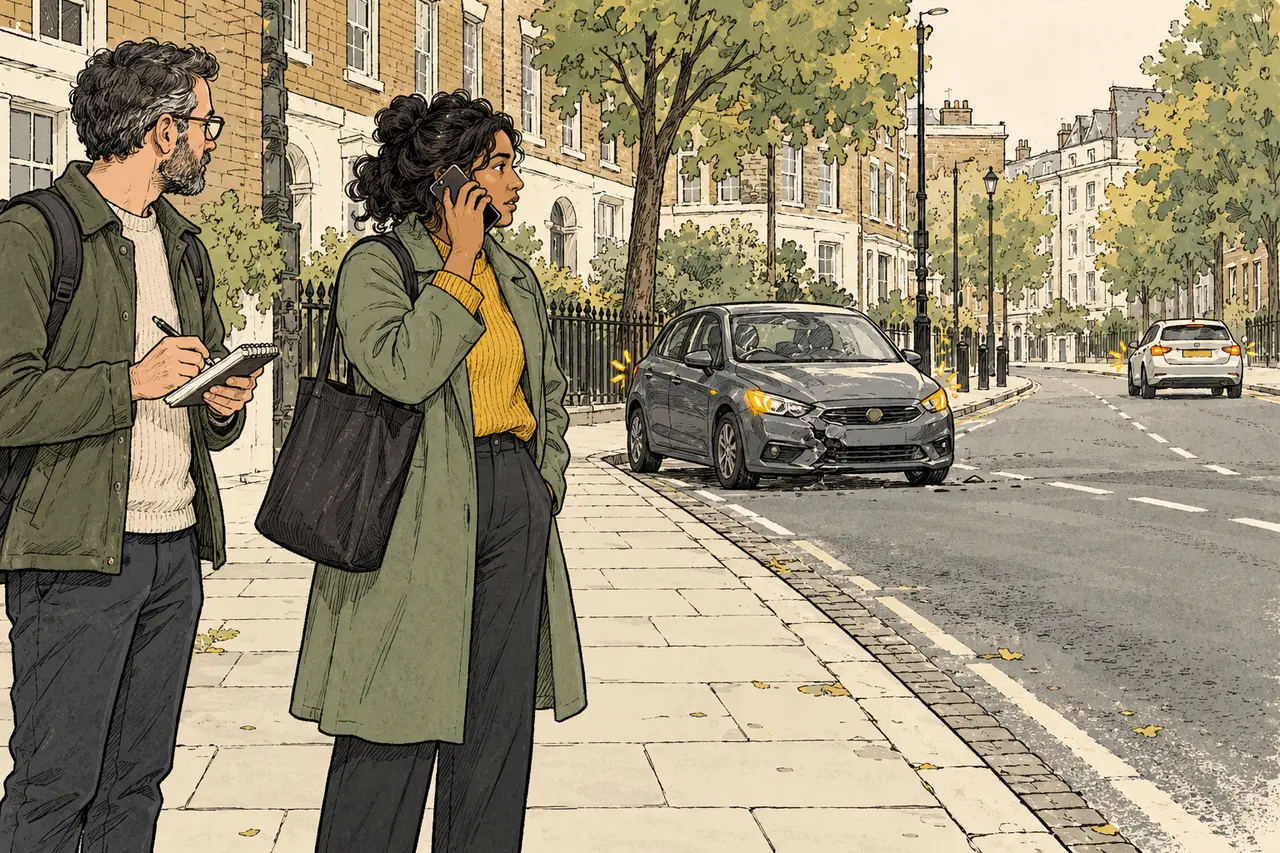
Once safe, note the street and crossing, time, direction of travel, number and description of vehicles, and any registration you noticed without moving closer to obtain it. Say whether you saw high speed, weaving or ignored signals, rather than claiming a race you cannot verify. The Metropolitan Police has routes for vehicle nuisance and road-traffic offences; its website helps you choose. For a non-emergency, use the Met online route or call 101. Do not put yourself in danger to film. If there has been a collision, use the road-traffic incident route instead.
Raise a repeated residential problem
If this keeps happening, report each new incident with its date, location and observed behaviour. In London, Community Roadwatch lets residents suggest a residential area with speeding concerns to their local policing team; it is a separate way to raise a pattern, not an emergency service or a promise of enforcement. Ask neighbours for their own accounts if they wish to report, without confronting drivers or posting accusations. Continue to use 999 for immediate danger and 101 or the Met's online reporting for non-urgent incidents.
Your quick checklist.
Tick what you’ve done. This stays on this page.
0 of 3 markedDownload a short text copy to read without internet. It cannot call or alert anyone.
A few things explained.
Should I film the cars or try to read their number plates?
Only keep details you can notice from a safe place. Do not step into the road, follow a car or delay getting away to record evidence. A place, time and clear account of what happened can still be reported. If you already have safe footage, follow the Met's reporting instructions rather than posting an accusation online.
Is this street racing or just noisy driving?
The Met describes street racing as illegal racing on a public road. It also describes street cruising, stunts and other vehicle nuisance. From a short observation you may not be able to tell which applies. Explain the speed, manoeuvres, number of vehicles and crossing behaviour you actually saw. Police can decide how to classify the report.
What if cars keep speeding near the crossing but no one is in danger right now?
Use the Met's non-emergency vehicle-nuisance or road-traffic reporting route, or call 101. For an ongoing residential pattern, Community Roadwatch accepts suggestions for areas of concern and passes them to a local Safer Neighbourhoods Team. Its speed checks and warning letters are used where appropriate; suggesting a street does not guarantee either. Use 999 if someone is in immediate danger.