I saw a driver leave after a collision. What should I do?
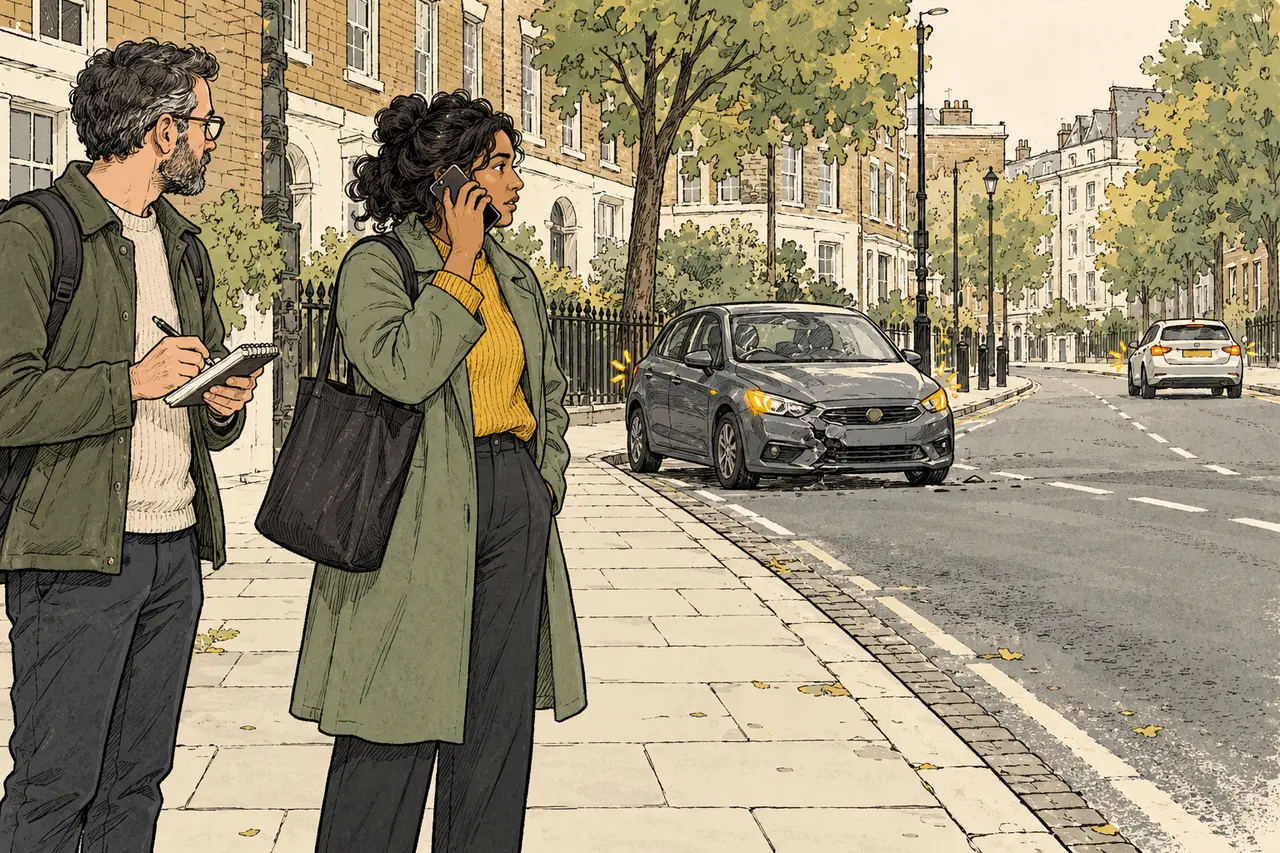
Imagine you are walking past a junction when two vehicles collide and one drives away. You may feel you should catch its number plate, but traffic and injured people need attention first. A witness can help by calling for assistance and giving a clear account, without following the vehicle or deciding who was at fault. This guide is for pedestrians who witness a possible hit-and-run, with the Metropolitan Police's reporting and footage requirements explained for its London area.
ishowcrime desk
Sources checked 28 October 2026
Here’s what you can do.
Get help from a safe place
Stay clear of moving traffic, broken glass and other hazards. Call 999 if someone is in danger or seriously injured, or the collision creates a dangerous road blockage. Give the road, nearby junction or landmark, direction of travel, number of vehicles and what you can see about any injuries. Follow the call handler's instructions, including any first-aid advice. Do not delay an emergency call to take photographs or get a registration number.
Record only what you safely saw
From a safe place, note the time, location and any registration number you actually saw. PSNI's collision advice recommends writing a departing vehicle's registration down promptly so police can try to trace it. Do not chase, confront or try to stop the driver to complete your notes. Describe what you saw and heard, and say where your memory is uncertain; do not fill gaps with guesses. Your account helps police assess the incident, but you do not need to establish blame yourself.
Give police your account and any footage
For a non-emergency, call 101 or use the relevant force's official route, even if you have left the scene. Say you are a witness and keep the confirmation. For driving-offence reports, the Met asks to receive them within seven days; later reports are unlikely to lead to action. Report promptly rather than waiting for more evidence. This is not a general deadline for every collision or a replacement for an involved driver's legal duties. Keep original footage for 12 months and remove publicly posted copies. The Met asks for video covering one minute before and after the incident, unedited except for trimming to that period. This gives context, rather than only the moment of impact. Do not delay emergency help to film.
Your quick checklist.
Tick what you’ve done. This stays on this page.
0 of 3 markedDownload a short text copy to read without internet. It cannot call or alert anyone.
A few things explained.
What if my footage is incomplete or its time is wrong?
Give what you know without filling gaps. The Met allows a partial registration in collision footage, but cannot enhance pictures or video. Explain missing context or an incorrect timestamp in your report; if the case reaches court, you may be asked about timing differences or an absent timestamp. Do not add effects to make unclear details look certain. Tell police where any relevant camera is and who owns it, if known. Do not assume it captured the incident or put yourself at risk trying to obtain footage. Incomplete footage does not establish who was at fault, and submitting it does not guarantee action.
Should I move an injured person out of a vehicle?
The Highway Code says not to move a casualty from a vehicle unless there is a threat of further danger, and not to remove a motorcyclist's helmet unless essential. Call 999 for a serious injury and follow the call handler's instructions. Stay with the person if safe and tell the emergency service if their condition changes. Do not attempt a risky rescue just to clear the road.
What happens if police ask me for a statement?
It is your account of what you saw, heard or know. Check it carefully, ask for corrections before signing and request an interpreter if needed. You may later be asked to give evidence in court. Tell the officer if you feel afraid or need help; the linked witness-support guide explains options when someone pressures you. A report does not guarantee prosecution or routine progress updates.