What should I do after a break-in at my shop?
You arrive to open the shop and find a damaged door or missing stock. It may be tempting to go straight in and start clearing up, but an intruder could still be inside and disturbed surfaces may hold evidence. First deal with safety and reporting, then work with police and your insurer on the next steps. A break-in can affect trading as well as the cost of stolen goods.
ishowcrime desk
Sources checked 22 October 2026
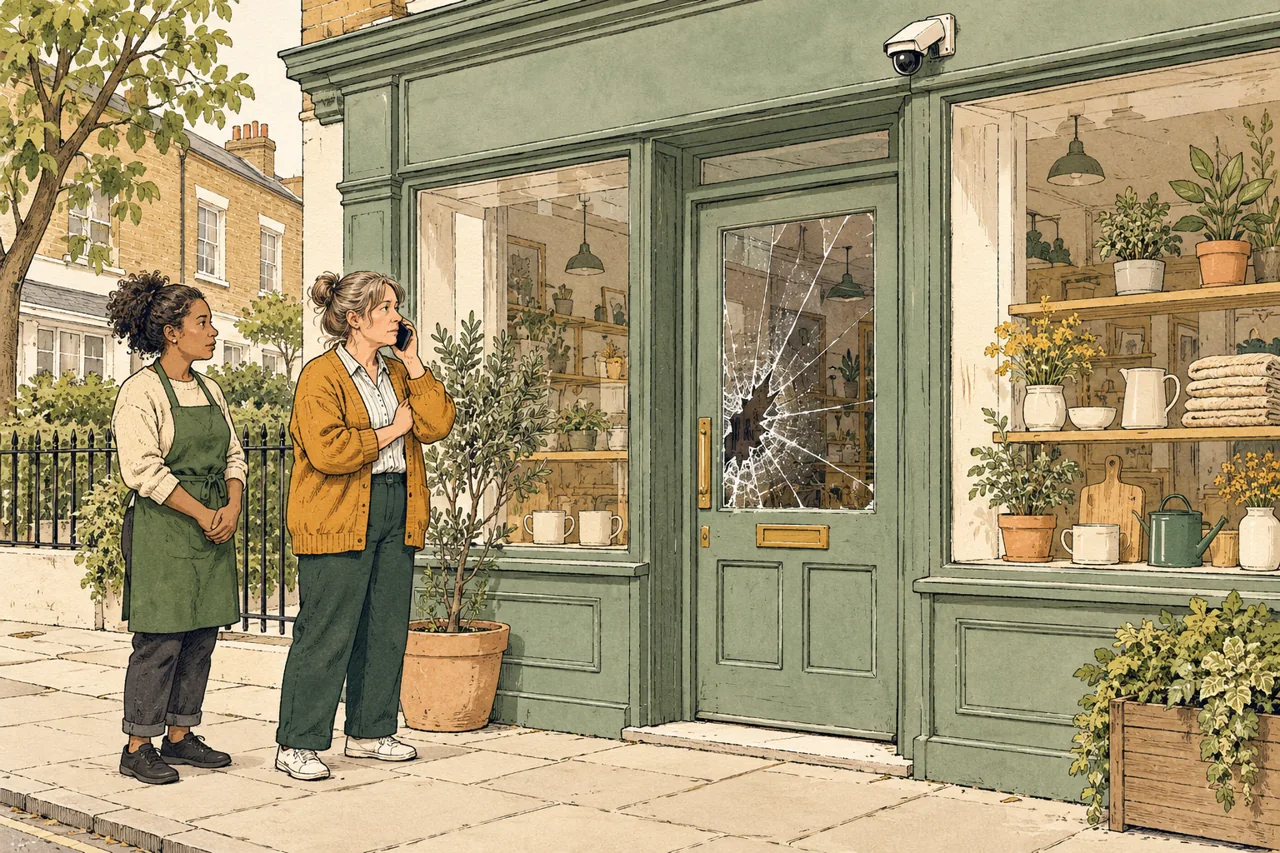
Here’s what you can do.
Keep people clear and report it
Do not enter unless you are sure the intruder has left. Call 999 if the crime is happening now or someone is in immediate danger. For a non-emergency, use 101 or the official police online reporting route linked below. Describe what you found without guessing who did it. Keep colleagues away from disturbed areas. Avoid touching or moving things and walking where someone may have left footprints. Tell police about possible evidence and ask what must remain undisturbed before repairs. Protecting staff comes before checking stock.
Preserve the recordings and damage
Do not switch off CCTV or change its settings. If you can safely download the relevant recording, include five minutes before and after the incident and keep the original on the device. If you cannot download it, leave the system on, note the date and time shown, and tell police that you need help retrieving it. Photograph damage when safe, and ask police about preserving evidence before cleaning or arranging repairs. Share recordings through the route agreed with police. Business CCTV still has data-protection requirements; retaining useful evidence is different from publishing it online.
Contact the insurer and plan safe repairs
Contact your business insurer promptly using your policy's claims details. Keep the policy number, crime reference and available photographs or other supporting records together. Ask what is covered, what excess applies and which repairs or replacement costs need agreement. Reporting to police does not start an insurance claim. Once police have advised about evidence, arrange suitable repairs and review the security weakness. The Met recommends secure service doors, working alarms and CCTV, lighting around loading areas, and keeping valuable stock out of display windows overnight. Ask about suitable security-rated doors and glazing rather than simply replacing a damaged fitting with the same weak one.
Your quick checklist.
Tick what you’ve done. This stays on this page.
0 of 3 markedDownload a short text copy to read without internet. It cannot call or alert anyone.
A few things explained.
Will insurance cover the income lost while the shop is closed?
Do not assume so. The Association of British Insurers explains that business interruption cover concerns losses following events specified in the policy and is often an optional extra. Ask your insurer or broker whether your actual circumstances are covered, what records it needs and which costs it will consider.
How can I explain the wider effect on my business to police?
Ask about an Impact Statement for Business. It can describe stolen goods, damage, money lost and loss of custom. Police.uk says one person, usually the owner, director or manager, should make it; they need not have witnessed the crime but may need to give evidence. Submit it through your police contact before any court hearing begins. It helps the court consider the impact when sentencing; it is not an insurance claim.
Should I install shutters or bollards straight away?
Get appropriate advice first. The Met says external shutters and anti-ram bollards may need planning approval. Have vulnerable doors and windows assessed, keep service doors secure when unused, and make sure alarms and cameras work. Check any proposed work with the relevant planning authority and your insurer. Extra hardware does not guarantee that a break-in cannot happen.