Unfamiliar activity in my shared stairwell: who can help?
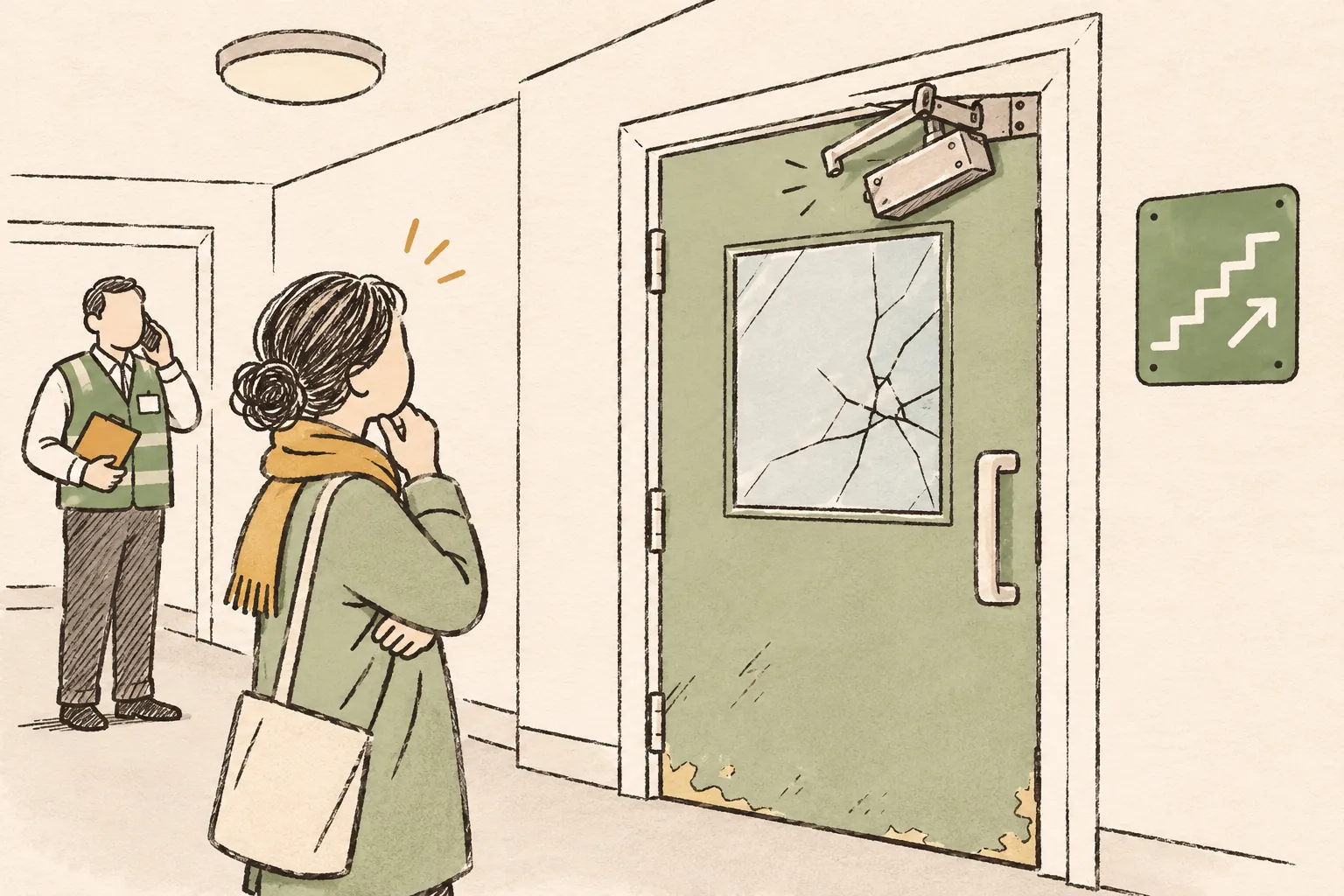
You hear someone in the shared stairwell late at night, or notice the entrance door repeatedly left open. A visitor, neighbour or contractor may have a good reason to be there; an unfamiliar face alone is not evidence of a crime. Focus on what you can actually see or hear: a door that will not close, someone trying flat handles, repeated disturbance or a direct threat. You can raise an access fault with the building manager and report threatening or potentially criminal behaviour through the right route without confronting anyone.
ishowcrime desk
Sources checked 20 November 2026
Here’s what you can do.
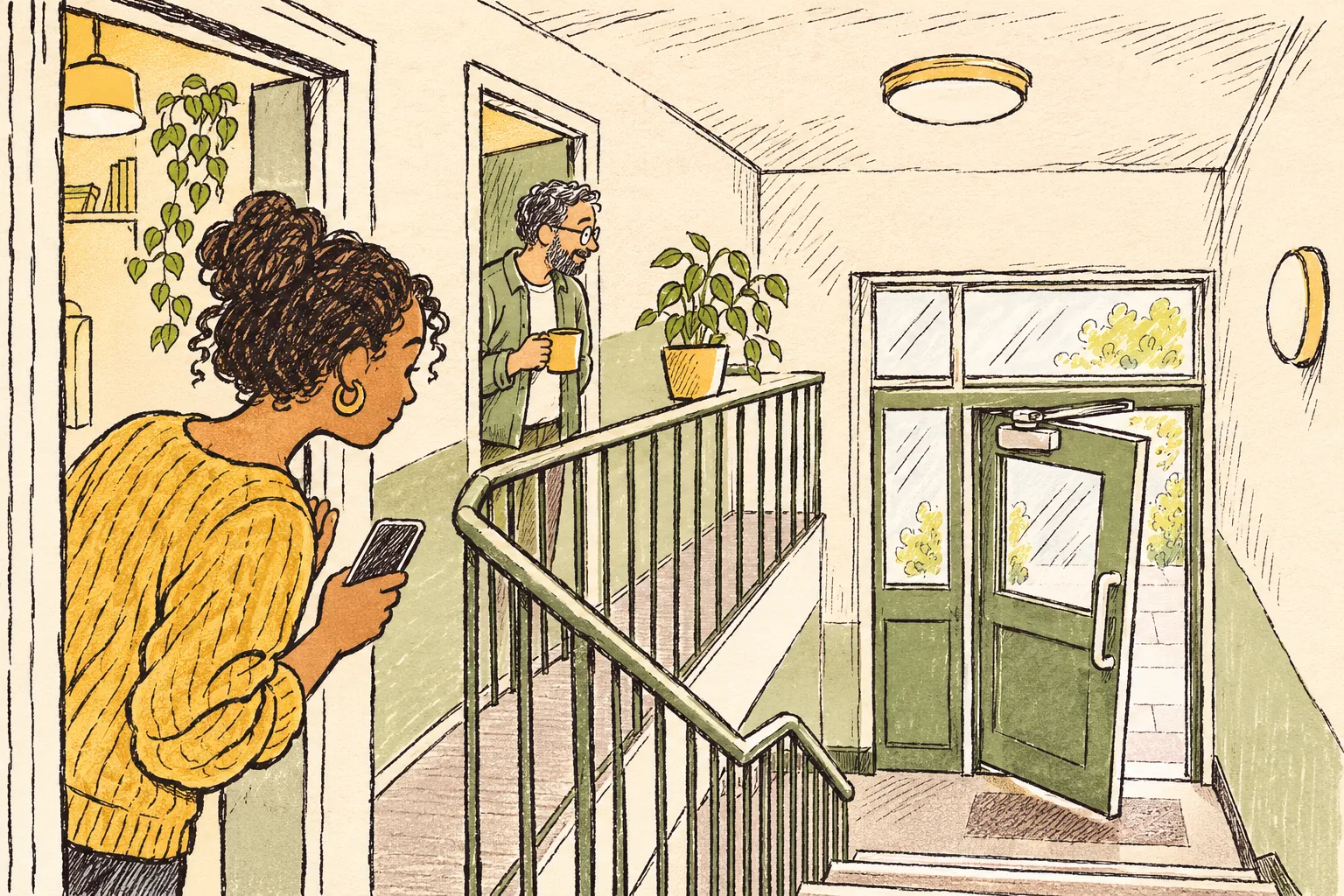
Stay safe and describe the behaviour
If you feel threatened, move to your flat or another safe place rather than challenging or following anyone. Note the time, place and behaviour you observed, such as someone trying door handles or repeated shouting. Do not assume that a person is suspicious because you do not recognise them, or because of their appearance. If someone is in immediate danger or a serious offence is happening, call 999. A calm, factual account helps others assess what happened.
Tell the right person about the building
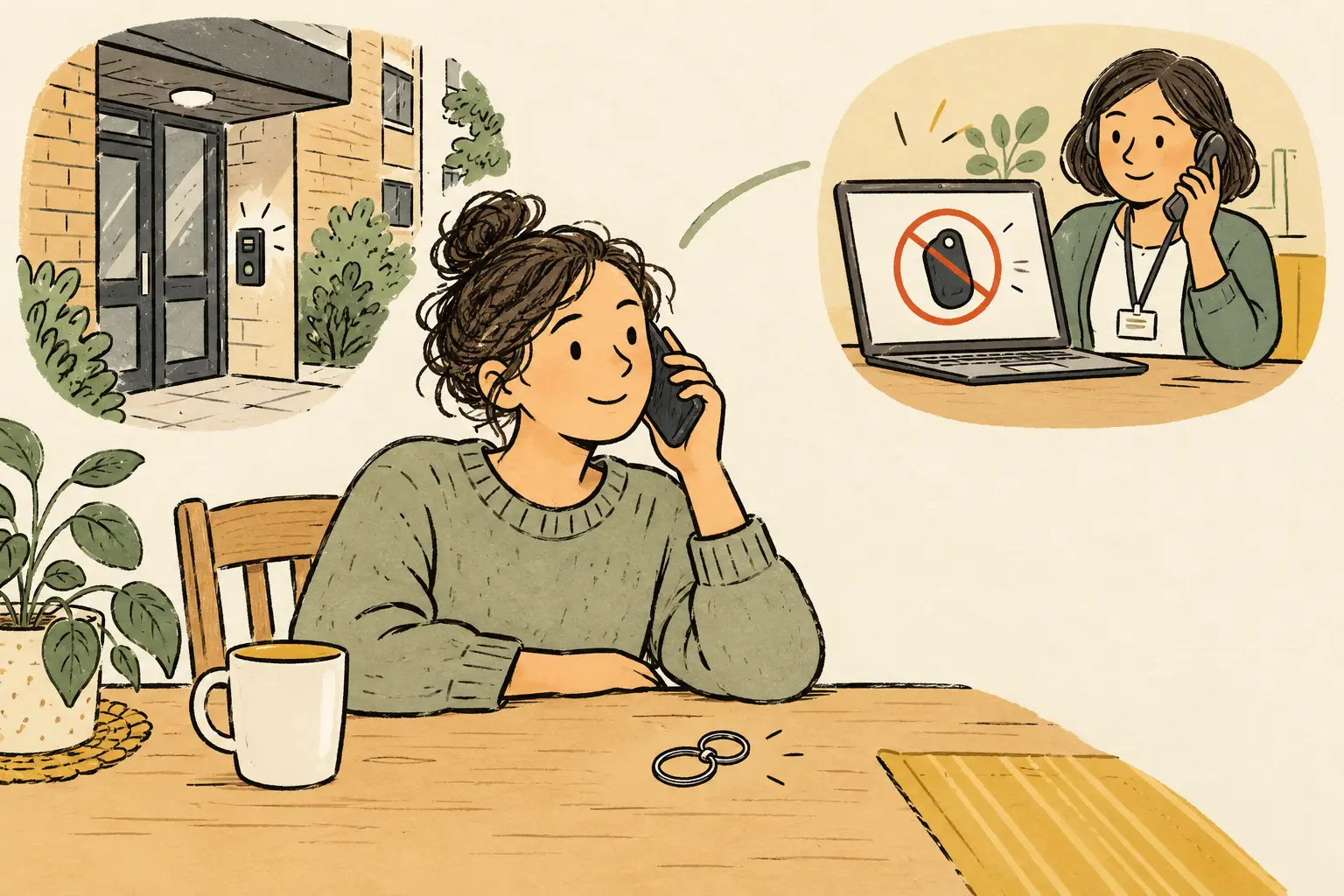
Check whether the communal door closes and locks behind you without putting yourself near anyone you fear. Police.uk says a faulty entrance or light should be reported to the landlord or managing agent for repair. Do not buzz in an unknown visitor or leave a shared entrance propped open. Tell the manager the location and when you noticed the fault so they can check it. If you rent from a council or housing association and repeated behaviour in the building is causing alarm or distress, you can report it to that landlord too.
Report threats or repeated antisocial behaviour
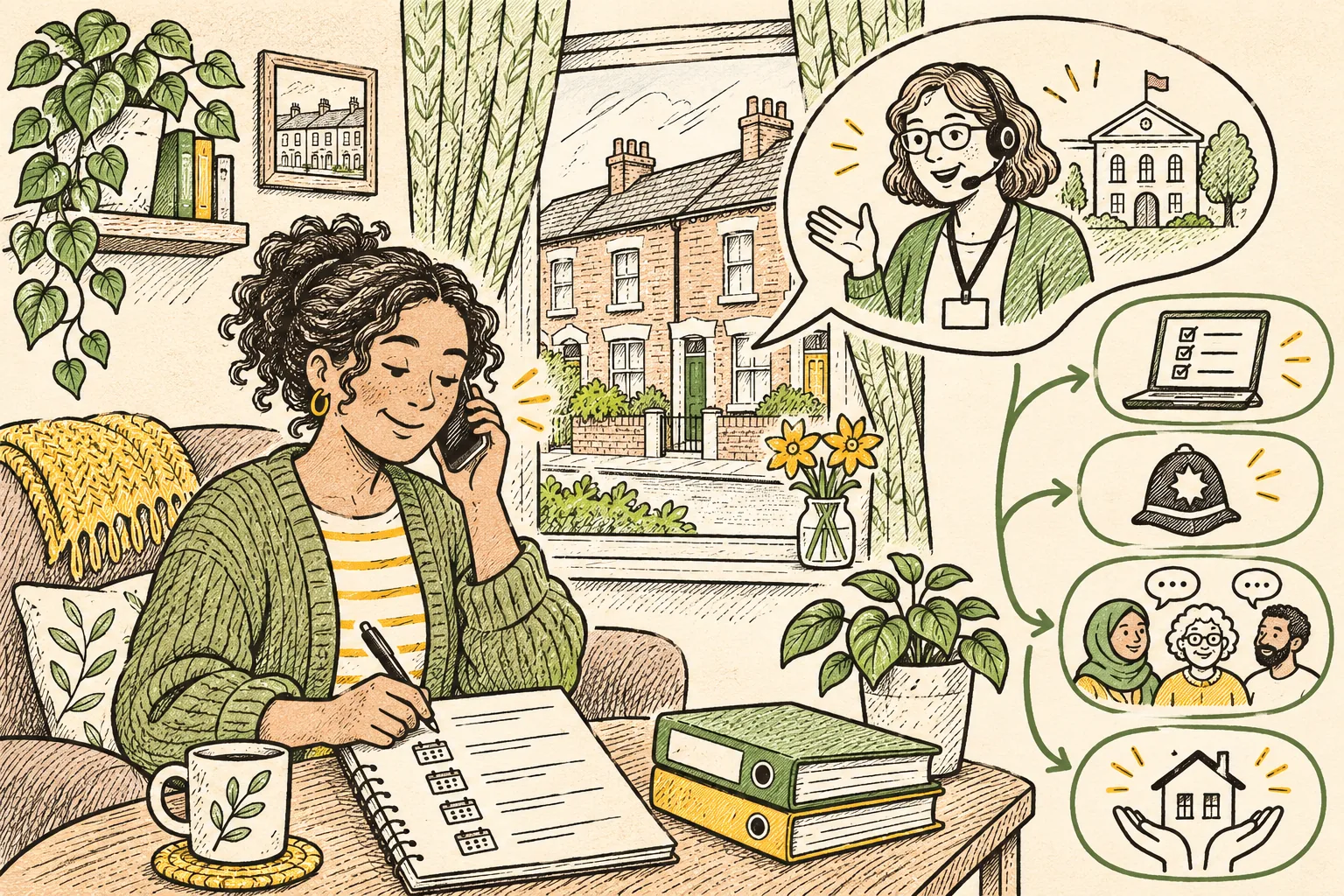
If behaviour makes you fear for safety, includes threats or appears criminal, contact your local police through its online service where available or call 101 for a non-emergency. Explain what happened rather than declaring that a visitor committed an offence. In England and Wales, GOV.UK says councils, social landlords and police handle different types of antisocial behaviour; a one-off concern may not meet that description, but you can still seek advice. Reporting routes differ in Scotland and Northern Ireland, so use the local police or housing provider's official route there. Keep any reference and update the building manager if an access problem continues.
Your quick checklist.
Tick what you’ve done. This stays on this page.
0 of 3 markedDownload a short text copy to read without internet. It cannot call or alert anyone.
A few things explained.
Should I report someone simply because I do not recognise them?
Not recognising a person does not establish wrongdoing in a shared building. Focus on specific behaviour or a security fault. Police.uk encourages reporting concerns when you may have been affected by crime, even if you are unsure whether an offence occurred; describe the facts without an accusation.
Who fixes a communal entrance that will not close?
Police.uk says to report a communal door that does not lock properly, or failed lighting, to the landlord or managing agent so it can be repaired. Give the exact location and what is not working. Do not leave the door propped open.
When should I call police rather than the housing provider?
Call 999 for immediate danger or a serious offence in progress. Use 101 or your local force's online reporting service for non-urgent threats, suspected crime or antisocial behaviour that makes you fear for safety. The housing provider handles building faults and can also take reports of problems in or near a social housing building. Rules and reporting routes vary by UK nation.