A cosmetic product has missing or altered labels. What should I do?
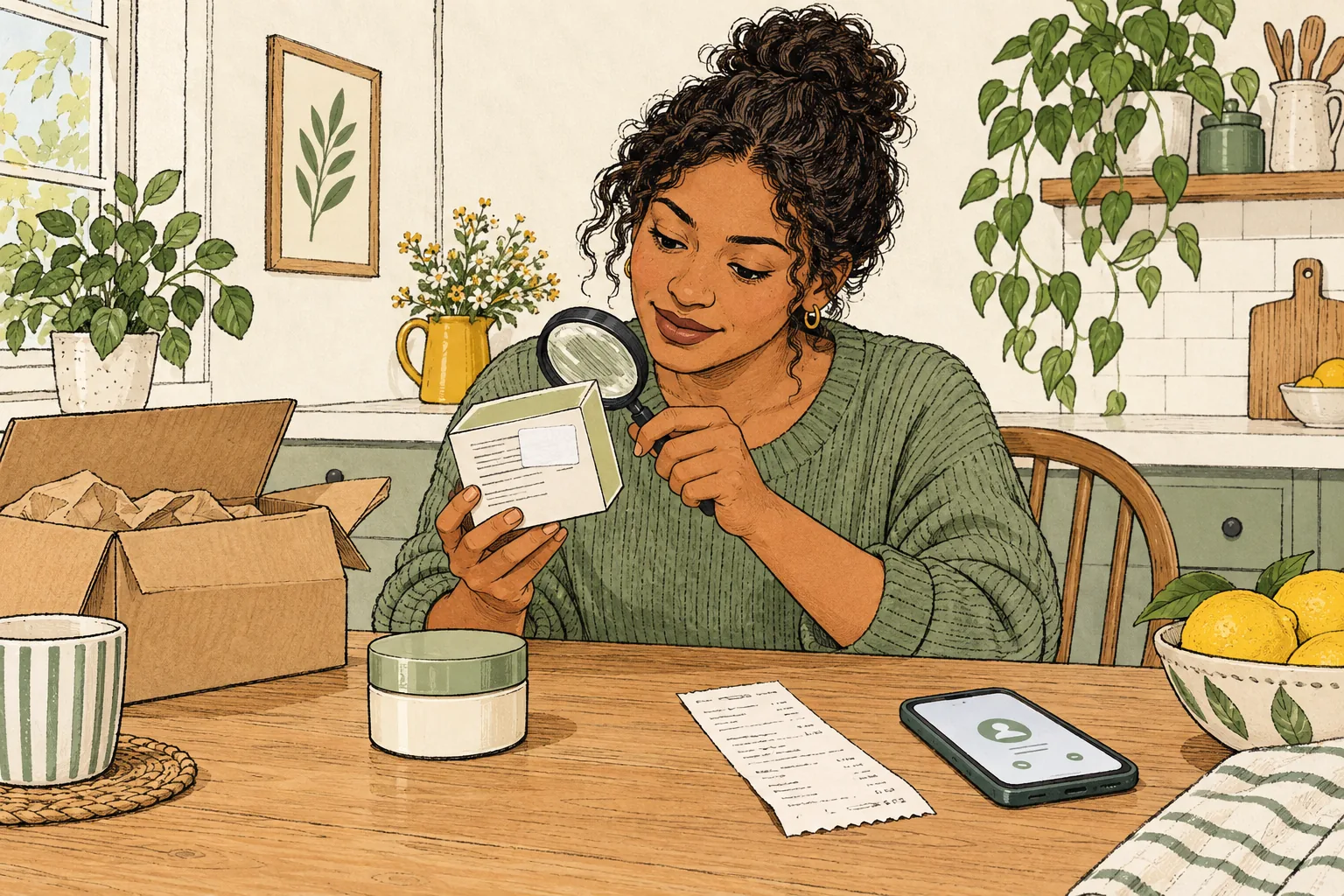
You open a parcel containing face cream, but a sticker hides the ingredients and the seller cannot explain the packaging. That is a reason to pause before using it, not proof that it is counterfeit. Missing information can prevent you checking allergens, precautions or who is responsible for the product. In Great Britain, cosmetics need readable safety information, including when supplied as free samples or used by a professional.
ishowcrime desk
Sources checked 22 October 2026
Here’s what you can do.
Pause and check all the packaging
Keep the product unused while you check the container, outer box and any leaflet. Look for ingredients, precautions, the named Responsible Person and address, a batch or identification number, and the relevant date or period-after-opening symbol. Ingredients may legitimately appear only on the packaging; a small container may use an enclosed leaflet. Missing information on the jar alone does not establish a fake. If information is covered, unreadable or still missing, ask the seller or manufacturer to explain it before use. Check the maker through its independently found website. These details help you assess suitability and identify the product if a problem needs reporting.
Raise the concern and keep useful details
Contact the seller or marketplace about what is wrong and keep the order details, correspondence and photographs of the packaging. Check the exact product against GOV.UK's Product Recalls and Alerts and follow any matching notice. Not finding a recall does not settle an unresolved safety concern. Report a product you think could harm someone through Citizens Advice consumer support in England or Wales, Advice Direct Scotland in Scotland, or your local district council in Northern Ireland. The reporting page below links to each route. Ask separately about a refund or replacement; making a safety report is not itself a refund claim.
Get health advice if you have already used it
If you develop a skin reaction, stop using the suspected trigger and speak to a pharmacist. NHS advice says persistent, recurring or severe contact-dermatitis symptoms need a GP assessment. A reaction can have different causes and does not prove that a product is counterfeit. Call 999 for an ambulance if your lips, mouth, tongue or throat suddenly swell, you struggle to breathe or swallow, or someone faints and cannot be woken. These can be signs of a serious allergic reaction. If you have an adrenaline auto-injector, use it as directed for suspected anaphylaxis. Do not wait for the seller or a reporting service to reply.
Your quick checklist.
Tick what you’ve done. This stays on this page.
0 of 3 markedDownload a short text copy to read without internet. It cannot call or alert anyone.
A few things explained.
Does a missing date or ingredient list always prove a fake?
No. OPSS explains that ingredients may be on the outer packaging or an enclosed leaflet where space is limited. Some products use a period-after-opening symbol, and there are exceptions for items such as single-use packs. Check the complete product information and ask the maker about anything unclear. Do not treat a familiar logo, a low price or one missing detail as conclusive proof either way.
What does the open-jar symbol mean?
It indicates the period after opening, usually expressed in months or years. Follow that information alongside the product's storage and use instructions. It does not resolve missing ingredients or an unexplained change to the label.
Can I report a safety concern even if nobody was hurt?
Yes. GOV.UK asks consumers to report products they think could harm someone. Give the product and seller details and describe what you actually found, without needing to prove counterfeiting yourself. The manufacturer or seller may need to investigate the batch. If you have symptoms, seek appropriate medical advice separately.