How can I check a second-hand bicycle before paying?
You find a second-hand bicycle at an attractive price, but the seller wants a quick payment and has no paperwork. That is a reason to pause, not proof of theft. Stolen bicycles can be offered through classified adverts or second-hand shops. Checking the bike itself, its history and the seller's documents helps you decide whether to proceed. A database search is only one check. BikeRegister warns that its checker cannot identify a stolen bike that the original owner never registered. A result with no stolen-bike match is not a guarantee of ownership or mechanical safety.
ishowcrime desk
Sources checked 2 November 2026
Here’s what you can do.
Ask about its history before paying
Ask for the original purchase receipt and service history, and compare the price with similar bicycles of the same age and condition. Ask how long the seller has owned it and whether anything needs repairing. Pressure to hurry, only stock photographs or an unusually low price deserve further checks. Missing paperwork alone does not establish a crime; if you cannot resolve your doubts, leave the purchase. Find out whether you are buying from a business or a private individual, and save the advert and messages: they record what was promised if a problem emerges.
Check the frame number and condition
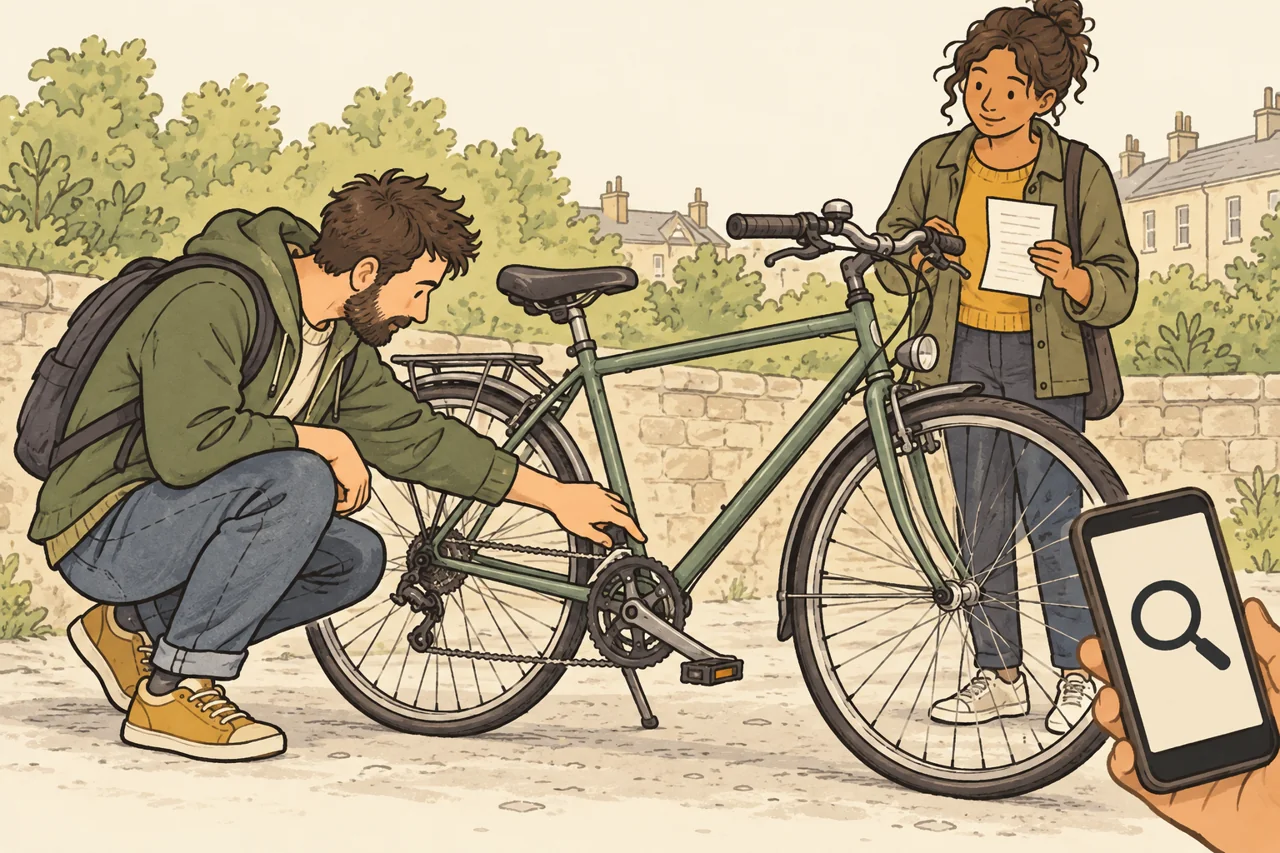
Ask for the frame number or BikeRegister marking and use the official BikeChecker link below. At a viewing, compare it with the number on the bicycle, rather than relying on the advert or a screenshot. Attempts to remove or alter the markings are serious warning signs. Ownership checks do not establish mechanical safety. Look for frame cracks or serious dents, worn tyres and damaged parts. Ask about crashes and modifications. Cycling UK warns that carbon-frame damage can be difficult or impossible to spot by eye; a clean-looking frame is not proof that it is sound. If you lack the knowledge to assess the bike, take an experienced person or arrange a bike-shop inspection before paying. Walk away from unresolved frame damage rather than relying on a test ride to prove it is safe.
Keep a receipt or report a concern
If you proceed, get a receipt and keep your purchase records. For a bike on BikeRegister, the registered owner signs in, selects the bike, opens the Transfer tab and enters your email address. Follow the emailed instructions to complete the transfer. Updating registration does not replace your receipt or checks before purchase. If you suspect it is stolen, do not buy it. Report the concern to police on 101 and to the marketplace through its genuine reporting controls. Describe what you know without accusing or confronting the seller. For a crime happening now or immediate danger, call 999 from safety.
Your quick checklist.
Tick what you’ve done. This stays on this page.
0 of 3 markedDownload a short text copy to read without internet. It cannot call or alert anyone.
A few things explained.
Does a clear BikeChecker result mean the bike cannot be stolen?
No. It searches the BikeRegister database, so it cannot establish the history of every bicycle. An unregistered bike may have no record. Check the actual markings, paperwork and seller's account as well; do not treat a blank search as permission to ignore other warning signs.
What if the second-hand bicycle turns out to be faulty?
Keep the advert, messages and proof of payment, and contact the seller promptly about the problem. In England, for a purchase from a business, being second-hand does not remove consumer rights: depending on the circumstances, a fault or misleading description may justify a refund, repair or replacement. Known faults, normal wear or damage you caused are different. Do not assume a private sale gives the same protection as buying from a shop. Citizens Advice's England guidance explains that goods from a private seller must still match their description and provides a complaint letter. Use its consumer service for help with your circumstances; its pages also link to advice for the other UK nations. A safety concern is a reason to stop riding while it is assessed, not proof of theft.
What if I have already bought a bicycle I now think is stolen?
Contact police on 101 and ask how to hand it over. Citizens Advice's England guidance says not to keep it or return it to the seller yourself. Keep the crime reference and property log number given when handing it in, plus proof of purchase. Ask the seller for a refund; if that fails, seek consumer advice about your payment method and next steps. Getting your money back is not guaranteed. The linked Citizens Advice page provides separate advice for Wales, Scotland and Northern Ireland.